WhatIFF Issue 1.01 WhatIFF Issue 1.02 WhatIFF Issue 1.03 WhatIFF Issue 1.04 WhatIFF Issue 1.05 WhatIFF Issue 1.06 WhatIFF Issue 1.07 WhatIFF Issue 1.08 WhatIFF Issue 2.09 WhatIFF Issue 2.10 WhatIFF Issue 2.11 WhatIFF Issue 2.12 WhatIFF Issue 3.13 WhatIFF Issue 3.14 WhatIFF Issue 3.15 WhatIFF Issue 4.16 WhatIFF Issue 4.17 WhatIFF Issue 4.18 WhatIFF Issue 5.19 WhatIFF Issue 5.20 WhatIFF Issue 5.21
Download PDFWhatIFF? Issue 4.18
TopWhatIFF? For The Creative Amiga User
CONTENTS +#### #### ###%## +####+########+########+ +####+ `#+ `## #' ## `## `##+ +#+ `##+ +#+ +##+ +#+ ## ## # +#+ +#+ +#+ #' +#+ #' +#' ## ## ## +# ## # ## ## + ## + +#+ +#+ +## #+ ## %#. ## ## +# ## +# ## ## ###+ # ##+#+ +#.## #### ## ##### ##### ##' ## #+## # #####+ ##+### +# ## ## +# ## +# +#' +#+# ##+# ##'+## +#+ ## ## ## ## + ## + #+ ..:###.###+.+#+ ## ## #+ +#+ +#+ +#+ +#+ +' ::::##+:###::##::+##:##+:+#..##..##'..##'......##'............. :::::+#::+#+::##::##+%+##:###%##:;##:::##:::::::##:::::::::::##::::.. `::::#:::#:::#+::+##::+##+ #:+######+####+:::+####+:::::::::##::aNdy; ..;::::::::::::::::::::::::::::::::::::::::::::::::::::::::::::::;' .::::::::::::::::::::::::::::::::::::::::::::::::::::::::::::;' `:::::::::; ,:::::::::::::::::;'`.::::::::::::::::::::;' `:::::; :::::::::::::::;' `::::;' For The Creative Amiga User! `:::::::::;' >> ENTER MAGAZINE <<TopWelcome to WhatIFF?
CONTENTS============================================================================ -# WhatIFF? - Issue 4.18 - December 2025 #- Music: ---------------------------------------------------------------------------- ?A few words from the editor and meet the writers of WhatIFF? --EDITORS DESK-- -MEET THE WRITERS-- ? Where Amigans Speak Freely and Reader Letters! ---SHELL TALK--- -----TALK BACK----- ? Reviews of hardware and software, old and new. -----REVIEWS---- ---GAME REVIEWS---- ? Guides and support for all things Amiga. -----GUIDES----- -----ARTICLES------ ? Interviews and the latest of Aminet over 4 months. -TALKING AMIGA-- ---AMINET PULSE---- ? Amiga related links and Amiga vendor websites. -----LINKS------ ---AMIGA VENDORS--- ---AMIGA GROUPS---- ? Cover disk contents and contributors. ---COVER DISK--- -==========================================================================- *All content copyright of the respective authors 2025* -==========================================================================-
TopFrom The Editor's Desk
CONTENTS ============================================================================ From The Editor's Desk - by: Timo Paul ============================================================================ Hello and welcome to the December 2025 issue of WhatIFF?, it is hard to belive that we are soon ending 2025. It seems that each year passes more swiftly than the last. So much has happened this year with regards to world events and the Amiga, as such I am happy to say we have a suitably packed issue for the last one of the year. Firstly, thank you to everyone who contributed to this issue and over the year, the magazine would not be exist without your hard work. This issue has been put out in record time of two months instead of the usual four months so it is more surprising that we were able to get as much content as we did. For interviews we have five this issue from Edwin van den Oosterkamp the creator of BassMX, Zooperdan, Aiden Holmes creator of the PCMCIACD driver, Electric Black Sheep and Alinea Amiga Shop. Reviews of the PicoWyfy, BassMX and retrospective review of the Blizzard MKIV. We have lots of guides and articles from our regular writers and someone even sent us in a letter! With 2025 coming to close we have much to look forward to, TheA1200 launch, more stock of the A6000, AmigaOS 3.3 and the continuing drama of the Commodore aquisition, already while writing this I can see new drama unfolding online with legal cases being brought against other companies with the Commodore name. Thank you to everyone who has been downloading and reading the magazine, it always gives me a boost to hear from you and I make sure to forward your comments onto the regular contributors. Finally I have to apologise for the music playlist this issue, due to a lack of contributors I had to make all the music myself. Hopefully next issue we can get some decent and professional sounding music again. For those of you who read this section, thank you and I wish you a most Merry Xmas and a happy new year. See you on the flip side!TopLetters From WhatIFF? Readers
CONTENTS ============================================================================ Talk Back: Reader Letters ============================================================================ Welcome to Talk Back, the section of the magazine where we publish a select few of the letters that we receive. Thank you to everyone who has written in and those who have gone on to write articles for the magazine. We always welcome any written contributions to the magazine. Everyone has a unique perspective and Amiga story to tell. If you wish to write to the magazine or contribute then please contact us at: submissions@whatiff.info ---------------------------------------------------------------------------- Hello Timo, You ask for our Amiga Storys in the new WhatIFF Amiga Mag. so i just feel to share my Amiga Story. Written on an A1200 (hope it works) with YAM and gmail. When i was a Kid about 7-8 Years my Dad got on Xmas an C64 with Datatape (without any Games). He was at a friend and saw some Games on the C64 and was so happy about that. My Mother buy him a C64 for Xmas but for me it was the first time to see a Computer. Before i only saw some Computers at Movies etc. so over the xmas days we had only the C64 Manual with some Basic Programms of a flying Ballon with a C logo. No Games at All but it was so crazy to write something and get a result on screen. It was Magic, later i buy Games on Tape and play on the C64 of my Dad. He did nothing with it really, maybe playing a Game sometimes. I got a real freak and buy later a Disc Drive and copy floppys with friends, like Teenager do. Then we got slowly Informations about the next C64 (Amiga) and it was crazy to believe what it should do compared to our C64. So i got one of the early 1.3 Amiga500 for my Bday, and there was a tankmouse inside. I never use a mouse before ? but it look funny. I build it up and call some friends if they got any Amiga Games, then they just came with Maniac Mansion and Shuffelpuck Cafe. Mansion i know already from C64 and i was total impressed with the high graphics on the Amiga. Shuffelpuck was a mouse game and it was difficult to use a mouse. At end i was happy, so i did learn to use a Computer mouse. I still play this Game sometimes just for the Nostalgic feeling. Later i upgrade a secound drive for less disc changes, an memory expansion for Games that need it. Hell it was a great time, we feel part of something big coming. We feel like pioneers of Computers, speak our language about RAM, ROM, Chips and meet people at Conventions. Mostly i had the Problem like you, i was very Young at that time so people did not tread me serious at begin. CHAPTER II Later people switch to PC as Commodore was going under like Magazines show PC Games and the CDROM was coming forward. So like my friends i switch and the Begin till Pentium3 times we had much fun, lan Partys and playing Quake, Unreal Tournament all this games.Starcraft, WarcraftII and even Shadow Warrior had a Multiplayer. 2023 i was at a point that no PC Game brings me joy anymore, PC Games got into Survival/Building Games to Farm hours of real Time to build something like a House. It feel more like Work after Work ! Guilds demand you to be online on specific Times to Raid something. I did not feel happy anymore ! So my Gamer PC got OLD and i had to choose to upgrade the PC for NextGen RTX or do something complete other... So i decide to buy myself the A1200 that i never had but always wish for and switch from PC back to Amiga for 700Euros. Yes i read in your mag about "Amiga get out of reach" but i just had to buy it and a New PC Gaming Rig would be more. Maybe this is a strange Story becouse most people want to read about the "past" and not the "now" but Amiga is Still active and People are coming back. So i install everything with more Luck as Brain :) Workbench 3.1 wow never saw that and how many things changed. Then AmigaOS 3.2 came out right in time for me. The learing curve was not so high, i remember startup-sequence and other things back from the days. Also there was much new Software out between 1995-2024 things i never hear of, or could use of demands. Like Amiga Writer a tool i use many times, Photogenics a HD Paint/Photo Programm (i just remember Deluxe Paint), Apdf Amiga can read PDF ? wow great. Wonders over Wonders what all happend in the Time i was on PC. So many modern Programms like Internet Protocol and iBrowser, YAM, FTP Programms and even Videoplayers for Mp4. I think this time it was even better as in the Past, i wonder so much about the modern Amiga 68k ! Doom, Duke3D, Descent so many Games and still Games coming like SettlersII or small indie Productions from Users. I think the best Amiga Time i have right now in 2025. No Joke! i got a PiStorm on my A1200 and everything flows like butter. It feels like a modern PC but on Amiga such experiance i had never before and it makes me smile everyday new. I know PiStorm is not liked by every Amiga User but to upgrade now to a PPC Turbocard, RAM, PCMCIA Network, HDMI Out, RTG is JUST NOT PAYABLE at last here in Germany. So the PiStorm is a easy and cheap way to get on that Level without paying a Mercedes for Upgrades. I search on ibrowser for Mod Pages and Download Music, New Mod Music and play them in Hippo while doing stuff. Like i scan over Wlan on my Brother and can upload it directly on my Router Drive (256GB USB Stick) my Amiga can access the FTP of the Router and i can Download my Scans, then i open them in Photogenics and resize them smaller for better work performance. Crazy or ? i can upload documents to the Router and Print them over Mobile Phone, there should be a way to script automatic Printing but i'm to noob for this. It hears compilcated but when you do it 20-30 times, it just is a matter of 1 minute. Just wanted to say everything works and for the rest i own my Mobile Phone like Youtube. I rencode mkv to divx and can watch movies on my Amiga over FroggerNG. Mp3 over AmigaAmp. Well what else do you need ? WHDLoad brings joy of classics and 68060 Games are running smooth on the PiStorm. So under the line, i would say i'm a very happy Person now ! More happy as with PCs or Classic Amiga, i love the amiga workflow or just listen to a Mod on my Amiga while reading a Comic in PDF format. It relax me, it make me feel nostalgic warm and doing something on Computer is FUN Again. PS: Im German so excuse my English, i just learn School English but hopefull you will understand the meaning even without correct typo. Kind regards Mike Swat ---------------------------------------------------------------------------TopWhere Amigans Speak Freely!
CONTENTS ============================================================================ Shell Talk@ - PiStorm Ponderings - by: ByteBandit ============================================================================ It's funny how the Amiga scene moves in cycles. One minute we're all arguing about the purity of ECS versus AGA, or whether WHDLoad counts as "real" disk usage, and the next minute we're bolting Raspberry Pis onto our motherboards like some sort of cybernetic Franken-Amiga. Yes, I'm talking about the mighty (and sometimes *too* mighty) PiStorm. Don't get me wrong: the PiStorm family is an incredible technical achievement. The fact that a tiny ARM board can mimic a 68030, 040, or 060 faster than anything Commodore ever dreamed of is mind-bending. The PiStorm32 Lite for the A1200 pushes things even further, letting people jump into RTG modes, crank up absurd resolutions, and even run old PC software through emulation layers that make your faithful 68k blush. It's *amazing*. But it's also? well? a little bit weird. Somewhere along the line, the original soul of the machine starts to slip through our fingers. When an A1200 is suddenly running Windows 3.1 apps at warp speed, displaying 1080p desktops, and pretending to be a retro PC, you start to wonder whether you're still using an Amiga or just a Pi with a very large and nostalgic dongle hanging off it. And then there's the cost. For the price of a PiStorm setup?Pi, SD card, power, adapter, riser boards, cooling, and all the bits and bobs you *swear* you won't need until you do, you could run UAE on a PC, a laptop, or even a standalone Pi with far fewer headaches. They'll run the same software, often faster, and in some cases with better compatibility. So the argument becomes: if what you want is raw speed and convenience, why not just go full emulator and spare your vintage hardware the stress? The thing is, the Amiga has always been about the *experience*. The whirr of the drive. The feel of the keyboard. The odd little quirks that only real hardware gives you. The PiStorm, in all its brilliance, risks flattening that experience into something more generic, something powerful, yes, but also less distinctly Amiga. Of course, some users love it. And fair play to them! It's their machine, their desk, their retro future. But as more and more videos pop up of people running old PC software on their PiStorm-boosted A1200s, using RTG to reach resolutions that would make a Picasso IV weep, it starts feeling like the line has blurred a bit too far. When your Amiga spends more time pretending to be a 486 than it does running Deluxe Paint, you might want to ask yourself whether you're augmenting the machine? or replacing it. Maybe I'm old-fashioned. Maybe I like my Amigas like I like my coffee: warm, slightly unpredictable, and definitely not pretending to be a PC. But as the PiStorm revolution races ahead, I find myself hoping we don't lose sight of why we kept these machines alive in the first place. Power is fun. Speed is fun. Running Doom at 200 FPS on an A500 is hilarious. But the heart of the Amiga was never about raw horsepower. It was about the unique mix of charm, design, and creativity that no other machine had. So enjoy your PiStorms, just don't forget to let your Amiga be an Amiga once in a while. -- ByteBanditTopWelcome to the reviews section!
CONTENTS ============================================================================ -= R E V I E W S =---------------------------------------------------------- ---------------------------------------------------------------------------- -= Hardware Preview: Mirari PPC Board =- John Scolieri previews the new PPC board, Mirari, find out inside if this might be your new ticke to the world of Amiga PPC software. -= Hardware Retrospective: Blizzard Accelerator =- Martyn Bampton reviews the Blizzard 030 cards with from a 2025 perspective find out inside how well they stack up next to the current generation of accelerator cards. -= Hardware Review: PicoWyfy =- We look at the new WIFI adapter from Niklas the hardware developer known for the A314-cp. -= Hardware Review: BassMX =- Are you not satisfied with the standard Amiga audio then this new audio adapter might be just what you are looking for. ---------------------------------------------------------------------------- #Reviews - WhatIFF? Issue 4.18 - December 2025#TopHardware prereview: Mirari
Reviews ============================================================================ Hardware preview:Mirari PPC Board - by John Scolieri ============================================================================ New Mirari PPC motherboard for AmigaOS4 and MorphOS ! So, what is Mirari PPC? It's a soon to be released PowerPC motherboard being produced by a small team of Dutch Amiga fans who also happen to be hardware engineers.They named the new PPC motherboard Mirari which translated from Portuguese means miracle (based on a small team delivering new PPC hardware in the Amiga verse nowadays is truly a miracle!) What are the specs of this new board? Form Factor: micro-ATX compatible Dimensions: 244 x 170 mm (L x W) CPU: QorlQ T1042 multi-core processor (up to 1.6 GHz) Memory: DDR3L SODIMM, 1.35V Type: DDR3L SODIMM Voltage: 1.35V Speed: Up to DDR1600 Expansion Slots: PCIe x16-4 lanes occupied (PCIe 2.0) PCIe x4-1 lane occupied (T10x2 PCIe 2.0) PCIe x1-1 lane occupied (PCIe 2.0) Storage Interfaces: SATA: 2x SATA 2.0 (T10x2 only, 300 Mbit/s) NVMe: 2x NVMe slots (one slot mutually exclusive with SATA) Additional Features: USB Ports: USB 3.2 Gen1 FPGA: Onboard FPGA for additional functionality Operating System Support: Compatible with various PPC Linux distributions, AmigaOS 4, and MorphOS What's the release date? According to news from AmiWest in the US and Amiga40 in Germany all hardware prototypes are completed. Linux and MorphOS are running fine and the AmigaOS4 team is working on the kernel and drivers. The estimate release date is mid 2026. How much will it cost? Between 500-600 euros Why should you buy this? 1. You loved your Phase 5 PPC back in the day and you still love Amiga :-) 2. You're old PegasosII, micro AmigaONE, or AmigaONE G3-SE or XE can't be fixed anymore or you want a quicker system and also use a modern video card. 2. It's half the price of currently available PPC hardware from A-Eon (AmigaONE X5000) and also approx. 300 euros cheaper than the SAM460ex from ACube Systems. 3. Overall speed wise it's approximately 75% of the AmigaONE X5000/20 system. Still interested? Follow the Mirari Team at https://mirari.vitasys.nl/ Wishing all Amiga fans world wide a Merry Christmas/Happy Holidays 2025!!! G. ScolieriTopHardware review:?A look back (and forward!) at the Blizzard 1230-IV Turbo
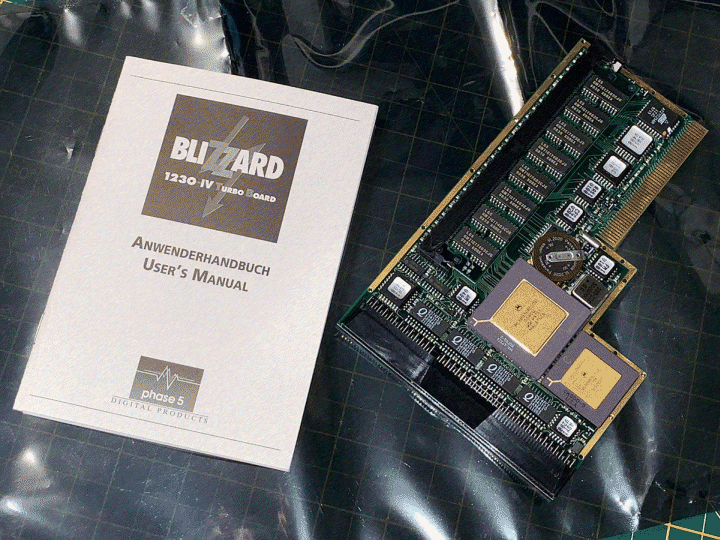
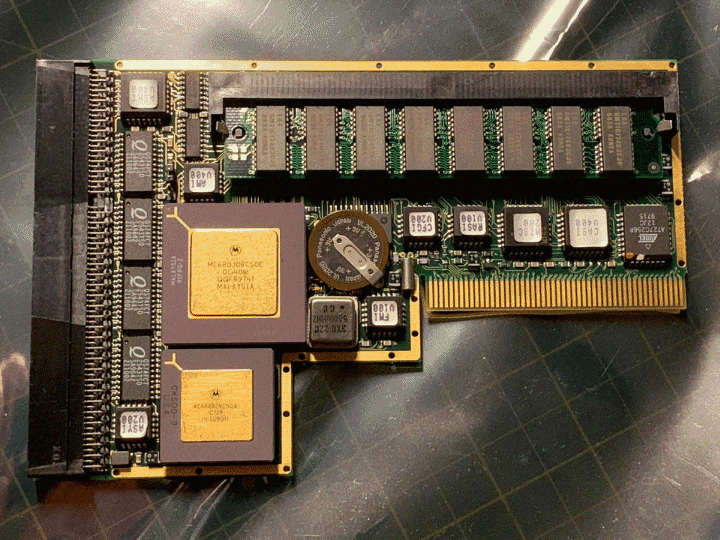
Reviews ============================================================================= Hardware review:?Blizzard 1230-IV Turbo - by Martyn Bampton ============================================================================= Product Name Blizzard 1230-IV Turbo Board Developed By Phase 5 Digital Products (later DCE) Available From * AmiBay * eBay * Other second hand markets Price It varies but depending on condition and configuration expect to pay anywhere from about 250 to 700 be it pounds, dollars or euros! Hardware Requirements * An Amiga 1200. Test Machine * Amiga 1200 A look back (and forward!) at the Blizzard 1230-IV Turbo Blizzard Card & ManualIntroduction In the late 90s I was lucky enough to get a few Phase 5 boards.? I spent a lot of time reading various magazine reviews, adverts and going over the specifications and performance figures, this was going to be amazing and I couldn't wait!? They weren't cheap and it took a lot of summer job income to afford them but I was always impressed with their quality and just how much of an upgrade such boards provided.? One of those boards was the highly recommended Blizzard 1230-IV for the Amiga 1200, the fourth and final 030 board. In later years Phase 5 sold the rights to DCE who continued to manufacture and sell the board, in some cases with a different RTC battery. The Blizzard mounted a PGA 68030, PGA 68882, a 72 pin SIMM socket and a real time clock on an A1200 trapdoor accelerator card - a common configuration but the Blizzard also had an edge connector for an optional SCSI card as well as a refined design.? There were various configuration options from a plain 030 board with an empty SIMM and FPU sockets to 030 CPU + 68882 FPU + SCSI Module and up to 256 MB RAM in two SIMMs - one on the board and one on the SCSI card - It takes a 70 ns or faster module up to 128 MB in size per socket. Blizzard Front
I won't go into too much detail on the SCSI card but if you're interested here's an excellent article by Steven (Lyonsden Blog): https://lyonsden.net/blizzard-scsi-kit-mkiv Hardware and Installation My Blizzard came with a 50MHz 68030, 50MHz 68882 FPU and an empty SIMM socket. I bought a 16 MB SIMM from a local computer shop - If you didn't buy the card with a 68882 or SCSI module you could always add them later but you should always add RAM.? There are two jumpers on the board, one for RAM timings (for a 10% speed increase if using RAM faster than 70 ns) and one jumper for enabling the built in MapROM function.? Everything else is set automatically. There is also a rechargeable lithium coin cell battery soldered to the board for keeping the real time clock going.? Mine didn't leak (they don't tend to), it could even still hold a charge!? Jan Beta has a video detailing how to replace the battery should you need to: https://www.youtube.com/watch?v=-sdXLAXbpfQ The board arrived in an appropriately sized black corrugated cardboard box with a nice black cardboard sleeve bearing the Blizzard logo and specifications.? Inside the box the board is wrapped in an antistatic bag and cushioned with foam padding, there's also a 12 page instruction manual in German and English.? There's no software included as configuration is handled by autoconfig and jumpers, though you should probably make sure you have the 68030 and MMU libraries.? I vividly recall that Installation was both exciting and rather nerve wracking, after carefully upending my A1200 and removing the trapdoor cover I took the Blizzard out of the antistatic bag and laid it on top (of the bag) and added the SIMM in preparation. You don't have to open your A1200's case but looking back it might make it easier if you do. After placing the card in the A1200 and lining it up (there's not a lot of space, it's a tight fit) I recall pushing it firmly and nothing happening.? Do I have it the right away around?? What other way could it possibly go?? After some self doubt, nervous wiggling and more pushing it finally slid home!? I put the trapdoor cover back on and plugged everything back in. You'd think after over 25 years and lots of computer building I'd be less apprehensive about doing it now but it's still a little challenging. Software and Performance The manual states that the board provides a "400% to 500% performance increase" and "significantly accelerated graphics".? I eagerly powered the A1200 and it booted fine thankfully, quicker too and with a whopping 16MB Fast RAM showing in Workbench!? The first thing I did was...? SysInfo!? Then AIBB for the beach ball test, I remember being absolutely thrilled at the results. It works! Results will vary from computer to computer but expect MIPS scores in the high 9.x range and Dhrystones over 9000.? After benchmarking I put it through its paces with VistaPro, Real 3D/Imagine/Cinema 4D, DPaint/PPaint ImageFX, Brilliance, Wordworth - It's odd how you remember these things but it was such a cool experience, like having a brand new Amiga!? I used the computer for games and productivity fairly equally so of course I appreciated the performance boost in more demanding games.? I used to play Gunship 2000 and Wing Commander quite a lot and the Blizzard really helped there. When Alien Breed 3D 2 was released it even came with a promotion for a Blizzard 1230-IV (or 1260) in the game box!? Apparently "Blood flies faster in a Blizzard"! This was the card to have, well, until the 1240/1260 /PPC boards came out anyway. Alien Breed 3D 2 Promotion
Summary That Blizzard served me well, never gave me any trouble or overheated.? In later years it and my A1200 ended up in a Micronik Infintiv tower case and ran Linux in addition to Workbench.? Well I really had no desire to switch to Windows!? Recently I rehoused the A1200 back in its original case as the tower had yellowed horribly in places and was always rather flimsy. Thankfully the computer booted first time, the Blizzard was still functional and aside from some slight label peeling it looks brand new!? I've decided to use that A1200 as it was in my bedroom growing up - complete with the Blizzard. Hopefully it will continue to provide the same performance boost for a quite while longer after 20 years in storage!? I'm very glad I kept hold of it and my other Phase 5 boards, they've shot up in price recently and you're lucky to get one for less than the price of an A1200, never mind the SCSI kit.? If you happen to find a good deal or come across one hiding in an A1200 then absolutely grab it, you won't be disappointed.? However, the reality is a modern accelerator like the TF1232 or even the TF1260 with a full 060 may be a more cost effective choice - you might not get a real time clock but you'll get 128 MB of RAM, FPU and an IDE interface. Note on finding a 68030 or a 68882 Unfortunately it's getting harder to find a legitimate 50 MHz 030 or 68882 FPU.? Most of what's for sale seems to be reconditioned used components that ended up as electronic waste for "recycling" i.e. cleaned/relabelled.? Perhaps resellers think customers want shiny chips that look new, rather than accurately marked chips that let us know what they're actually rated for.? So expect that many of the 50 MHz units are quite possibly relabelled chips which may have originally been any frequency up to 50 MHz - although later mask revisions typically tolerate this. I'm going to do an article on this problem after my experience trying to find an original 50 MHz 68882 but in the meantime here are some resources for mask/date verification: 68030: https://eharmon.net/retro/macintosh/motorola-processors 68882: https://68kmla.org/bb/index.php?threads/sourcing-legit-mc68882-fpus-data.46717 Pros and Cons + Excellent build quality. + Great expansion options including SCSI. + Probably the best original 68030 accelerator for the A1200. + Up to 128/256 MB Fast RAM! + Built in MapROM function and memory access speed option. + Speed! - Expensive, more capable newly built options are available for around the ?same price. - A bit of a tight fit. Other Key Points: * Many continue to function well even after 3 decades but you take your chances. * RTC clock battery probably needs replacing. * Finding legitimate 50 MHz 68030 CPUs and 68882 FPUs can be difficult and a little expensive. * Later boards manufactured by DCE may have non-rechargeable RTC batteries. Scores (2025) Ease of use: 95% Documentation/Packaging: 95% Value for money: 65% Overall: 85% - WhatIFF Silver (1995) Ease of use: 95% Documentation/Packaging: 95% Value for money: 86% Overall: 92% - WhatIFF Gold Sources and Credits Phase 5 Digital Products
TopHardware review: Picowyfy
Reviews ============================================================================ Hardware Review:Picowyfy - by Timo Paul ============================================================================ Product Name PicoWyfy Developed By Niklas Available From A314-cp Discord server via direct message Price 39 EUR Hardware Requirements Clockport Test Machine A1200 PiStorm A1200 TF1260 Review About two years ago I reviewed the A314-cp for WhatIFF? and gave it a very favourable review. In my opinion it was the most convenient and easiest way to get your Amiga connected, at the time. The developer of the A314-cp Niklas Ekstrom released a new project, the PicoWyfy last year. It is a wireless network interface controller (WNIC) that uses the Raspberry Pi Pico W and connects to the Amigas clock port, like the A314-cp. So, how does it differ from the A314-cp? To begin with it might be a good idea to revisit the A314-cp and what it does. When I had covered the A314-cp I focused on its ability to provide WIFI access without too much hassle. However, it is not only a WIFI adapter, you can use it as a file server, MP3 decoder and access the Pi's command line interface. In this regard the A314-cp allowed you to use the faster CPU of the Pi for some Amiga tasks. While not in the same vein as the PiStorm it still allows more than pure WIFI access. The PicoWyfy in this regard, is a different kind of beast. It is a more refined product with a focus on providing easy and fast WIFI access in any Amiga with a clockport. After having enjoyed the A314-cp I was interested to see how the PicoWyfy compares. At the moment it is only possible to purchase it via the A314 Discord channel by contacting Niklas. He was quick to reply and very helpful to any questions I had. Payment was by PayPal and he provided fast shipping with tracking. PicoWyfy Image 1It took about a week for the parcel to arrive and came packed in a padded envelope. So, if you order becareful to check your mail box as it is easy to miss it, like I did. While the enevlope was smaal, the PicoWyfy is tiny! The A314-cp is not a big card by any means but the PicoWyfy takes it further. When I first got my A313-cp, I had some troubles setting it up and connected to my router. It involved editing files on the Raspberry side and then copying the necessary files and using a static IP address. While it is easy with hindsight, for one who has not done any networking on the Amiga it can be a steep and frustrating learning curve. I am happy to say this time Niklas has made it as painless as possible. PicoWyfy Image 2
PicoWyfy Image Installed
Installation To begin with I made a fresh install of Roadshow and deleted any files related to my previous installs of A314-cp and Wifipi. I then copied over the files from the Picowyfy archive that can be found here: https://github.com/niklasekstrom/picowyfy contained in the archive are four files: File name Location for files ---------------------+-------------------------- * picowyfy.device | DEVS:Networks * PicoWyfyCtl | C: * picowyfy.config | DEVS: * PicoWyfy | DEVS:NetInterfaces Once you have the files installed you can set up the TCP/IP stack, and I recommend using Roadshow for this. It is still the best way to get your Amiga online due to still having support and the added benefit of speed. Where as with the A314-cp it was recommended to use a static IP address the PicoWyfy works best with DHCP, and this is very easy to setup with Roadshow. All you need is to set up the access point for the PicoWyfy. This is accomplished with PicoWyfyCtl programme, which should be kept in the C: directory. You can use the following commands: * status prints status of the network adapter * scan scans for wifi networks in range * connect connects to your chosen network * disconnect disconnects from the current network It is incredibly easy to set up, for example if your router's name is 'AmigaX' and the password '1234', all you need to type is: PicoWyfyCtl connect AmigaX 1234 It will connect right away, with no hassles or issues. At the moment it is not possible to save a favourite network, however it is simple enough to add the above line to your startup sequence. C:PicoWyfyCtl connect AmigaX 1234 QUIET QUIET was added as I did not have it pop up a Shell screen informing you of connection. If you use a clock port expander the PicoWyfy can still be used as long as you enter the correct port address in the 'picowyfy.config' file in Devs. Overall Impressions Getting your Amiga online in the past involved many steps and configurations with the advent of the A314-cp and Wifipi the entire process has been greatly simplefied. The PicoWyfy has made it even easier taking out many of the steps that were necessary before. Now all you need to do is install Roadshow, copy the files to the proper locations, enter your router details and away you go. Before getting the PicoWyfy I was using a PiStorm and tried Wifipi but ran into numerous issues. It was a pleasant surprise when the PicoWyfy arrived and I was online in under 5 minutes. If a dunce like me can get online with out issues then this card is fool proof. So, it is easy to install but what about the speed? I achieved download speeds of 579kB/s and upload speeds of 383kB/s. This was done with the AmiSpeedTest. So overal not too shabby. It may not be as speedy as the Wifipi but the PicoWyfy works with ease where as the Wifipi is known to have issues connecting to certain routers. There have been other users who have reported speeds of 1MB/s but this was when copying a file over a local network. Saying that, the card provides enough download bandwidth for downloading files from Aminet, using YAM or surfing the web in IBrowse. One thing I should mention though is that the card can cause the Amiga to freeze under certain circumstances. I found this to be most common if playing a game from Workbench. It seems that it is an effect of the card is connected to an access point and waiting for packets. The freezes are random and can even occur when running AmigaTestKit, this happens when running memory tests. However, if you shutdown the PicoWyfy the freezes disappear and you can run your games or AmigaTestKit without issue. If you are using Roadshow it can be accomplished by typing the following into the Shell: ConfigureNetInterface PicoWyfy offline With this command all my freezing issues disappeared, once your are finished gaming and are back in Workbench, you can reboot or type in the same command but instead of 'offline', use 'online'. ConfigureNetInterface PicoWyfy online I must thank the people on the A314-cp channel for helping me with this as I was under the impression my Amiga had failing Chip ram. Final Thoughts Finally we have a network interface that is easy to setup and works like you hope would. Niklas has created a top product that deserves much recognition for being as close to a plug in and play solution for net connectivity you will get on classic Amigas. Combined with Roadshow this is in my humble opinion the best way to get online, no other solution comes close to the ease and stability as the PicoWyfy. to create. *A Few Words from Niklas Elkstrom* Finally please have a look at his github to find out about other projects Niklas is working: https://github.com/niklasekstrom During a chat on Discord I asked him about the maximum potential speed of the PicoWyfy when writing this article, he had this to say: "I think it should be higher than for A314-cp. I saw this tweet where a guy saw speeds over 1.1 MB/s for picowyfy: https://x.com/AmigaWorld/status/1764250418731692320 But I guess it depends a lot on which Amiga it runs in. I haven't seen anywhere near those speeds on my Amiga. I get around 3 Mbit/s download speed. Another thing I would say is that I think A314 and PicoWyfy are very different things. PicoWyfy a wireless network interface, that's it, while A314 gives many different services, shared file system, the pi terminal integration. To me, the actual speed numbers don't matter that much. As long as it is convenient to copy files from aminet (for example) then that's enough for me. The convenience of having an internal wifi network interface is more important than having the fastest possible connection (for me, YMMV of course)."
TopHardware review: BassMX
Reviews ============================================================================ Hardware Review:BassMX - by Timo Paul ============================================================================ Product Name BassMX Developed By Edwin van den Oosterkamp Available From https://www.ebay.co.uk/itm/236187306353 Price Approx. 20 GBP Hardware Requirements None Test Machine A1200/TF1260/PicoWyfy/OS3.2.3 Review BassMX is a board created by Edwin van den Oosterkamp, well-known for his Amiga books *Classic Amiga OS Programming - An Introduction* and *Bare Metal Amiga Programming*. The Amiga's audio has always inspired mixed opinions. In 1985 Paula's sound capabilities were groundbreaking, but by the late 80s and early 90s users began to feel the limitations: hard-panned stereo and only four audio channels. Yet with time, Paula has gone from being criticised to being celebrated. Its constraints now feel more like character, something that pushes creativity instead of restricting it. Still, there's one issue almost everyone agrees on: the Amiga's extreme stereo separation. The usual workaround is using a single audio cable for a mono output, but this sacrifices the stereo field entirely. Over the years I've tried all kinds of solutions: standalone amps, mixers, audio boosters, and sometimes just embracing the mono output. They all worked in their own way, but none felt quite right. Then, during one of my routine Amiga patrols, I discovered the BassMX. What makes the BassMX interesting is that it doesn't simply merge both channels into mono. Instead, it filters the bass from each channel and mixes it into the opposite side. This keeps the stereo image intact while providing a more balanced, fuller sound. If you want to dive deeper into the technical side, you can read the interview with Edwin van den Oosterkamp @{ "here." link edwinoosterkampinterview } If you're interested in buying one, you can find it on eBay or order directly from Edwin. I contacted him directly because eBay wasn't shipping to Japan at the time. The total cost was just over 26 GBP including postage. Edwin shipped it promptly with tracking, and a little over a week later a small parcel arrived with the BassMX logo on top. @{ "BassMX Image 1" link Images/BassMX_1big.iff/MAIN }@{ "BassMX Image 2" link Images/BassMX_2big.iff/MAIN }
The board itself comes as an open PCB with rubber feet to keep it from sliding around. Each end features a pair of RCA sockets, and one side includes a mini-USB port for power. A USB-to-mini-USB cable is included. Labels clearly mark the input and output, but there's no LED or indicator to show when the device is powered. It's a compact board, and I found it fits neatly on the vented section of my A1200, staying put thanks to the rubber feet. @{ "BassMX Image 3" link Images/BassMX_3big.iff/MAIN }
Sound is everything So, how does it actually sound? My setup uses inexpensive Funology speakers, which, despite their size, offer a warm tone and surprisingly punchy bass. With the BassMX connected, the improvement was immediate. Because it spreads bass across both channels rather than collapsing everything into mono, the sound becomes noticeably fuller while still keeping a genuine stereo image. Even with my modest speakers, the Amiga's audio gained presence, warmth, and a more coherent low end. Some users may prefer the simplicity of true mono, easily achieved with a Y-adapter, but in doing so they would miss the nuance and character the BassMX preserves. I honestly didn't realise what my setup was missing until I heard the BassMX in action. Final Thoughts If you want to retain the original character of the Amiga's audio while giving it a more balanced, modern feel, the BassMX is a brilliant little upgrade. It's affordable, simple to set up, and offers a genuine improvement to the overall listening experience. Highly recommended for anyone who cares about getting the best sound from their Amiga.
Topgamereviews
CONTENTS ============================================================================ -= G A M E R E V I E W S =------------------------------------------------- ---------------------------------------------------------------------------- -= Game Review: Wordz =- The Zooperdan stable keeps us on our toes with another release, this time another puzzler but one with a different cerebral puzzle. -= Game Review: BLOK =- Not one Zooperdan review this issue but two, and this time another puzzler but not your typical Amiga puzzler. -= Game Review: ChaoticCrazyCastle =- A new Manic Miner/Jet Set Willy inspired game for OCS Amigas and all programmed within two weeks! ----------------------------------------------------------------------------Topwordzreview
Gamereviews ============================================================================ Game Review: Wordz - by Timo Paul ============================================================================ Product Name Wordz Developed By Zooperdan Available From https://zooperdan.itch.io/wordz Price Name your own price Hardware/Software Requirements Amiga 500 Kickstart 1.3 Test Machine Amiga 1200/TF1260/PicoWyfy/OS3.2.3 Review I confess to being a bit of a book worm, each time I travel to work I have two books in my bag along with a newspaper. Looking down at my smartphone watching videos or scrolling through endless boring content is not my idea of fun. But word searches are fun, at least for boring old me, and I enjoy taking my time in the newspaper to the crossword puzzles. After I had reviewed YEET in the last issue Zooperdan came out with another game, Wordz which we could not fit into the October issue. So, what is Wordz? As you can already guess by the intro and game title it is a word search game. Usually I world not include a review of such a game but this one has been dragging me back to Amiga, again and again. The game is available from Zooperdan's itch.io page and is a name your own price game. The game is small, simple and efficient. When you load up the game, you are presented with a simple but effective title screen and no music. There is an option to enter a code to jump stages. Starting from the first stage you have a list of words on the left and a grid of letters on the right. I confess being confussed for a while when searching for words, I was looking and could not find anything. But, then I found out what I was doing wrong. In the typical word search you have words going down, and left to right or diagonal. Wordz throws this out the window, requiring you to go left, up, right, down, down, left, and up. Essentially throw out the window what you think you know of traditional word searches and then the game starts to make sense. When I realised I should not being thinking of Wordz as a traditional word search game it became much easier to find words and turned into a very enjoyable game. As far I know there was no background music but then again I made this mistake with YEEP, I blame the years of going to raves and DJing which gave me hearing loss. Dan kindly pointed out in an email exchange about the music albeit it at a low volume. Maybe we need an ex-ravers music mode for those of us with hearing loss. Sorry for that rather odd aside, back to the game. Anyway, I decided to turn up the volume until I could hear the buzzing static of the Amiga audio, so yep, this time no BGM audio. There are some nice audio touches such as sound effects when you find a word and then move onto the next stage. I appreciate this as when I read I rather not listen to music, I know for some it helps them read but for me I prefer the quiet or rather constant whistling in my ears. Letter selection is done via the mouse and left clicking and holding while you drag out the selection of letters. That is all that is needed, the game is entirely mouse controlled. And that is pretty much it, it can be frustrating at first if you think of the game as a typical word search but once you understand the game play mechanics it becomes a great game to play. I even use this for my students and they enjoy it a lot. Funnily enough they figured out how to play the game much faster than I did, I guess they are not so set in their ways yet. Final Thoughts A fun little game that taxes your brain and hopefully teaches you some new vocabulary along the way. It is a good idea to have a dictionary with you as you might want to look up some of the words. Another little gem from Zooperdan. Also please checkout our interview with him in this issue.Topblokreview
Gamereviews ============================================================================ Game Review: BLOK - by Timo Paul ============================================================================ Product Name BLOK Developed By Zooperdan Available From https://zooperdan.itch.io/blok Price Name your own price Hardware/Software Requirements 1Mb Chip Ram (A500+, A600, A1200) Test Machine Amiga 1200/TF1260/PicoWyfy/OS3.2.3 Review Originally I was not planning to review this game in the December issue as we already have a review of Wordz but after playing this game I had to include it in this issue. BLOK came out in early November of this year and is a puzzle game where you roll a blue block through 24 levels of increasing difficulty. The game is available from Zooperdan's Itch.io page and is a small download of around 400Kb, I downloaded it on my Mac and it was easy to email it to my Amiga. The game can be started from Workbench, and when you first start the game you are presented with a title screen with the following options: New Game, Enter Code, View Credits, How to Play, Quit Game. The screen has a nicely done 3D render of the block and gameplay area. Selecting New Game will take you to the first stage, everything is presented in isometric 3D. You can control your block by the arrow keys or a joystick. The Enter key is used to select an option, during the game if you press the Enter key it will bring options to continue, reset and quit the back to the main menu, where you can go back to Workbench. I was very surprised when I first started to play the game as the block is unlike anything I have seen on the Amiga before. In BLOK Dan has rendered the block animation in 3D and then taken those frames to make a very modern looking game that would not look out of place on a smart phone. Once I got over the amazement of the block animation the game took over and in typical Zooperdan style this game is easy to pick up but hard to master. Rolling the block becomes natural in no time and the first few stages are easy to figure out. But that is short lived as the levels quickly get harder. Initially figuring out the correct orientation of the block is required but after a few levels you come across other obstacles such as buttons, timers, crumbing floors, bridges and grating which you should not stand on. Finally there are the lava sections which you can only roll over once. Final Thoughts Once again Zooperdan has created a fun and unique game, it amazing with YEET onlu just recently released and he comes out with BLOK. And despite that this is an incredibly fun game, the graphics are very nicely done and I still admire the 3D block animation after having played several times. The gameplay is simple but addictive, perfect for a puzzle game. Once again you deserve it to yourself to download BLOK and remember to donate to Dan for all his hard work, even just a few pounds goes a long way. Pros and Cons: + Brilliant block animation + Fun and addictive + Great music Scores Gameplay: 10/10 Graphics: 10/10 Sound: 8/10 Overall: 9.3/10Topchaoticcrazycastlereview
Gamereviews ============================================================================ Game Review: Chaotic Crazy Castle - by Timo Paul ============================================================================ Product Name Chaotic Crazy Castle Developed By Alberto Sgaggero Available From https://fourseasons.itch.io/chaotic-crazy-castle-for-commodore-amiga-500 Price Name your own price Hardware/Software Requirements A500 KS1.3/512KB Test Machine Amiga 1200/TF1260/PicoWyfy/OS3.2.3 Review Chaotic Crazy Castle is a game that was programmed in just two weeks on an A500 in AMOS. The developer Alberto Sgaggero says this shows, but does it? Find out below. The premise of the game is that you play a rather short mage who is on a quest to obtain herbs that he can use in a potion to make himself taller. Game play is spread over the several castle rooms and involve jumping onto ledges, avoiding enemies and collecting herbs. There is no way to kill and enemy so you need to plan your movements ahead of time and learn the patterns like true oldschool games. Movement is by the joystick or keyboard with the fire button/space bar used for jumping. On first loading the game you are presented with a Winners Don't Take Drugs inspired screen from the days of arcades. This version has a boing ball in the middle with the FBI replaced with the Retro Bureau of Nostalgia. Beneath it you have the ever famous "Begone drugs, you shall not pass!" by Ghandalf the White. Press the space bar or fire button and you are taken the main title screen that looks very reminicent of the Castlevania title screens. The graphics look good and come with BGM. Before starting the game you have several options: * Start * Music on/off * Sound on/off * Lives 5 * Fast off/on You can set lives up to a maximum of 9 and unlimited after that, fast on will speed up the gameplay. I found it difficult to go back to the standard speed after playing Fast mode. There are various tiles around the levels that will be required to access certain herbs or rooms and they are as follows: *Wood tile* You can jump through it from the bottom to top, but not vice versa. *Stone tile* You can walk over it, but you can?t jump through it from below. *Stair tile* Like an escalator, when your is over this tile, you will automatically be taken up. *R/L green warp tiles* They will automatically push you forward, you cannot walk back, unless you jump. *Down green warp tile* This will automatically take you down. *Centered green warp tile* These tiles will slow down your left-right movements. *Spring tile* As you would expect, this gives you more height when jumping. *Exclamation tile* Instant death! By default you start the game with 5 lives and 0 of 33 items/herbs to be collected. The only actions you have are moving left to right and jumping if you jump on an enemy you die, so you need to be careful and time all your jumps perfectly to clear the enemies and then run. Each of the enemies have a set pattern so it pays to bide your time and memorise the pattern as it is very easy to die in the game. If you die you are dropped back into the game play area and this is where the game has some issues. On one stage I died and was stuck in a loop where my character would fall at the same time as a passing enemy causing me to die again and again until I quit and restart the game. This happened several times and it is possible to get out of some of those situations by pressing left or right to alter your fall but if you are falling directly on an enemy it is too easy to get stuck in a death loop like I did. Saying that, I am not that good of a gamer and it could just be that I am really bad at this game and others will not have the same issue. Aside from that small niggle the game is a lot of fun, the graphics are cute and colourful. They remind me of some of the PC Engine games I used to play. The various enemies while deadly are also charming, and lok very similar to classic Japanese console games. Each of the enemies have small animations which is a welcome touch. In fact there is a fun tribute to Monty Python when you lose your final life and a giant foot comes down from the sky to crush you. You get some nice music while you play and sound effects, overall it is a very well presented game. It can be a tough game if you are used to simply jumping on the heads of enemies, but once you understand how to play the game it becomes very enjoyable. Moving between the rooms and figuring out where they connect to get to otherwise inaccesible areas is great fun. It is not a fast game but one that you need to think ahead to not get stuck in the future. I should mention that there is no save feature but due to the size of the game this should not be an issue. Final Thoughts Chaotic Crazy Castle is fun, challenging and cute game that has a great presentation and will keep you coming back for more. I am very much looking forward to the second game if Alberto makes one as this game is a lot fun and made me want more. The lovely graphics and small things like the Monty Python tribute make it the perfect game to play this winter season. Pros and Cons: + Tough but fun game + Good graphics and sound + Reminds me of games on the PC Engine - I wish it could be longer - Can be frustrating when getting into a death loop Scores Gameplay: 7.5/10 Graphics: 8/10 Sound: 7.5/10 Overall: 7.6/10TopWelcome to the guides section!
CONTENTS ============================================================================ -= T U T O R I A L S / G U I D E S =---------------------------------------- ---------------------------------------------------------------------------- -= Making Smooth Loops =- Roald Strauss is back with another great guide on getting the most from your Amiga audio. -= DigiPaint Basics: Part 3 =- Continuing from where we left off last time, this issue we explore the TxMap feature of DigiPaint for some artistic fun. -= Better Audio Sampling =- If you are new to Amiga audio or had trouble sampling then read this simple guide on how to best sample depending on the type of instrument. -= How to Backup Your Amiga CF Disk Drive on a Mac =- While there are many tutorials on how to back up your internal Amiga CF drive for Windows users, us Mac users have less options. ---------------------------------------------------------------------------- #Tutorials/Guides - WhatIFF? Issue 4.18 - December 2025#TopMaking smooth loops
Guides ============================================================================= Making smooth loops - by: Roald Strauss ============================================================================= Making MOD music is about working with limitations. We only have 4 channels of 8-bit resolution available. And if we want to make our MODs attractive to Amiga game-developers, we have to produce MODs that are very small in filesize. Because game-developers targeting a stock Amiga 500 will typically want MODs that are only between 20 kB and 80 kB in filesize, while game-developers targeting a stock Amiga 1200 typically lets you get away with MODs between 150 kB and 250 kB. There are really only 3 effective ways we can produce such a small filesize: - Minimise the number of patterns - Use low samplerates - Use instruments with a short length Minimising the number of patterns in your MOD is a matter of reusing patterns on the expense of variation in the track. Sometimes it also helps to use a clever mix of Fxx tempo/speed commands and E6x pattern loop commands. Each pattern takes up 1024 bytes. Turning the samplerate down is a simple matter of resampling the instruments, and maybe add a bit of treble boost to bring back some of the higher frequencies that were lost in the process. (Keep a version of the MOD with higher samplerates though - other platforms don't have the same limitations, and it's always good to be able to offer different versions of your track). And in order to minimise the length of our instruments, we can use loop points, on the expense of variation in the sound. Creating loops in our instruments is somewhat of a mission of its own. Who doesn't remember spending hours in the good old days trying to find an optimal pair of loop points in a string chord, only to give up in the end and settle for the very noticeable hick-up when the sample looped? As if there was a scratch in the vinyl record. Some of us might actually still use that approach, and sometimes it'll be ok too. As long as the mix with other instruments blurs out the hick-up, then it'll be fine. But that's not always the case. What only few of us knew back then, most of us have since come to know as general knowledge: There are ways to create smooth loops without hick-ups. In this tutorial we'll go through 3 different methods of achieving such a smooth loop. Two that you definitely already know about now, and one that you probably didn't know about: - Single cycle loop - Crossfade loop - Monotonic chord loop Single cycle loop When the focus is on producing a small filesize, it doesn't get more effective than the single cycle loop. This method is used extensively in chip tunes, which are typically tiny in filesize exactly because many of the instruments consists only of such single cycle loops. This is where you loop a single wave-length (or two) in the waveform somewhere. Or the whole sample could consist of nothing but such a single wave-length loop, thus resulting in a very small filesize - usually less than 100 frames! Single cycle loops will always give a monotonic "lifeless" sound, so you will have to add some life (intonation) to the instrument yourself, using commands like 4xy vibrate and/or 7xy tremolo. But the biggest problem with single cycle looped instruments, is one that is often overlooked: Tuning. In order to create a single cycle loop in tune (and with a clean sound as well) with the first part of the instrument, the wave-length has to be an integer number. Let's say we want to loop a C, meaning a 261,63 Hz tone (when using a 440 Hz scale). And let's say the samplerate for this tone is 16574 Hz. This will give us a wave-length of 16574 / 261,63 = 63,35 frames, which means that we need a single cycle loop of 63,35 frames in order to create a clean loop in tune with the first part of the sample. We can't do that though, because loop points has to be integer numbers. So the first thought you might get, will be to just round it down to 63. And that would be ok if we were creating an XM or S3M or IT. But loop points in a MOD must be a multiple of 2. So we have to round it up to 64 frames instead. Rounding the loop size up to 64 frames will give us a tone of 16574 / 64 = 258,97 Hz instead of 261,63 Hz. This means the tone will "bend down" a little when it reaches our single cycle loop, and it might also produce a bit of alias noise, because the loop size doesn't match the actual wave-length of the tone frequency. And that's how you may end up with a track where multiple instruments sound completely out of tune with each other. How to fix this? Well it's quite simple really. You just have to make sure that the samplerate is an integer multiple of the tone frequency. For a tone frequency of 261,63 Hz, the "correct" samplerate to use could be 261,63 * 64 = 16744,32 Hz. That'll give you have a nice clean sound in tune with the tone, using a loop of as close to 64 frames you can get with a 261,63 Hz tone. Any integer multiple of the tone-frequency will give you a single cycle length of that factor. A samplerate of 261,63 * 30 will give you a wave-length of about 30 frames. So it really is that simple. For an absolute perfect single cycle loop, where the wave-length is an exact integer, you should use integer tone frequencies as well. Instead of a C, go for the A at 220 Hz at a samplerate of 220*64 = 14080 Hz. This of course means you'll have to resample all of your other instruments as well, in order for them to be in tune with each other. And you'll also have to accept that the tones played in the MOD won't match the tones of the source of the instruments. But it'll totally be worth it when listening to the end result. As a side note: Although any integer multiple of the tone-frequency will work, there are two advantages in always using a factor of 2 to the power of n (where n can be any integer as long as the result is within the range of supported samplerates). In other words; aim for a factor of 16, 32, 64, 128 etc. Because then it also becomes much easier to - have the 9xx offset command always start at a zero-amplitude spot, to minimise click'n'pops, and - handle harmonic overtones: They will always be exactly n-1 octaves higher than the tone, meaning they will be in tune with each other - convert your track to the Super Nintendo (because the SPC700 soundchip in the SNES require loop points to be a multiple of 16, due to its BRR sample format) Crossfade loop As mentioned, a single cycle loop results in a somewhat lifeless monotonic sound. If we want more dynamic intonation in the sound than what we can produce with effect commands, then we need to loop more than a single cycle of audio. Just like we did with the old "scratch in the vinyl record" method. Except we'd like to avoid the scratch part. Most of us had no clue back in the old days, but nowadays we know about this technique for creating a smooth loop without any such hick-ups: Crossfading. If we record a 2-second long string chord, we can then - cut it into two halves, each 1 second long - fade in the first part - fade out the second part - mix those two together That's how you create a 1-second long crossfaded loop. It should sound smooth without any hick-up. But as we all know, nothing is ever that simple. There are of course other things we need to be aware of when making a crossfaded loop: Phases. If you simply split a random length of audio recording into two parts, the chance of the phases matching each other is slim to none. And while this may sometimes create an awesome phaser effect that you might quickly decide to stick with, you will simply get a completely different phaser effect for the next crossfaded loop. So you'll end up with string chords that each has a very different sound to them. Not optimal. To create an optimal crossfaded loop, you first have to locate a natural loop in the sound. Simply listen to the audio until you detect something that sounds somewhat like a loop. That's how long your crossfaded loop is going to be as well. Then zoom into the waveform and find the two spots where the frames looks somewhat similar. Just like you would when creating a "vinyl scratch loop". Then cut such two natural sounding loops next to each other, and make sure they are in phase. The beginning of both of them should look somewhat the same. Not necessarily 100% identical, but somewhat similar. Fade in the first part, and fade out the second part. Then mix together. That should give you a perfect crossfaded loop without any hick-ups and without any unwanted phase effect. Use that approach for all your crossfaded chord strings, and it should give you chord strings with the same sound. Monotonic chord loop While the crossfade technique will indeed give you a loop without any hick-ups, you will still be able to hear that it's a loop, because it repeats the same sound pattern over and over again. This is unavoidable with loops that contain changes in pitch and volume. You can make it less noticeable of course, by making the loop longer. But we'll need a loop of several seconds for that to work, and that will be on the expense of filesize. What if we want a chord that we literally can't hear is looping, while also keeping filesize down to a minimum? Can we do that? Absolutely! We simply need to go back to the monotonic sound again; a chord that sounds like 3 single-cycle tones. And combine such 3 monotonic waveforms with something called "just intonation". Let's try it out by creating a D major chord at a samplerate of 14080 Hz. A D major chord consist of the 3 tones D, F# and A. The D is at 587,33 Hz, and at a samplerate of 14080 Hz, that gives a wave-length of 23,97 frames. The F# is at 739,99 Hz, giving a wave-length of 19,03 frames. And the A is at 880 Hz, giving a wave-length of 16 frames. As we learned with the single cycle loop, the goal is to use a combination of tone frequency and samplerate that'll give us a wave-length that is an integer number. This is easy to achieve for single tones, but impossible to do for all 3 tones in a chord - unless we cheat a little bit... If we round 23,97 up to 24, and 19,03 down to 19, then we'll have 3 wave-lengths that is each an integer number. Then consequence is that the D and F# will be slightly out of tune. The D will now land at 586,67 Hz instead of 587,33 Hz, which means it'll be off by 0,11%. And the F# will land at 741,05 Hz instead of 739,99 Hz, which means it'll be off by 0,14%. In both cases that's such a small deviation that it doesn't matter, because it won't be noticeable. So now we have 3 integer wave-lengths of 16, 19 and 24. And this means we're now using "just intonation" tuning. All we have to do now, is to find the first integer number that - when divided with each of the 3 wave-lengths - results in an integer number for all three. I wrote a small little tool that simply counts an integer variable up until it finds that number. And that number tells you what the size of the loop will be. In this case: 912! Yes, you read that right. And I bet you probably won't believe it till you hear it. But it's true: You can actually make a chord, that you can't hear is a chord (because it uses "just intonation" tuning), using only 912 frames. Because: 912 frames / 16 frames per cycle = 57 cycles 912 frames / 19 frames per cycle = 48 cycles 912 frames / 24 frames per cycle = 38 cycles At 912 frames each tone will have completed an integer number of cycles. Ok, so how to do this? Well there are several ways, but let's use Milkytracker as our tool: You can use the Generator in the Sample Editor. Create a new instrument containing 14080 frames. Then generate a tone of 586,67 Hz at 30% volume. Use any kind of waveform you want; Sine, Triangle, Square or Sawtooth. Add another tone of 741,05 Hz at 30% volume again. And lastly a tone of 880 Hz again at 30%. Then set loop start to 0 and loop end to 912, and listen to the wonder that is a short monotonic loop without hick-ups and without being able to hear that it is a loop - in only 912 frames. You can play around with different samplerates and tone frequencies. Certain tones will deviate too much at certain samplerates. So the goal is to find the optimal frequencies for both the tones and samplerate, while at the same time having all the other instruments in the track stay in tune.TopDigiPaint Basics: Part 3
Guides ============================================================================= DigiPaint Basics: TxMap Fun - by: Timo Paul ============================================================================= Introduction In the last two issues we have been exploring what you can do with DigiPaint and in this third part of the series we will delve into the newest feature in version 3 of DigiPaint, TxMap. TxMap essentially allows you to warp/resize any custom brush and fit it into any shape you make. This even includes text. For TxMap to work you first need to create a custom brush, in my example I created a simple checkerboard using the 'Range' mode that we covered in the previous guides. Once you have your custom brush ready, you need to cut it out and then put it into the buffer, this can be accomplished from the menu by going to 'Brush -> Swap -> Copy Brush'. When you do this the TxMap menu will become unghosted and available. Now starts the TxMap fun! There are many options that can be used with TxMap and they are all controlled from the Warping controls setting area. To get there, make sure that TxMap is selected in the menubar, 'Mode -> TxMap', then click on the 'Controls' button on the bottom left. Here you will see several options just like before, the first one we will look at is the 'Tiles' one. As it sounds, this sets how many times your custom brush will be copied and only works in TxMap mode. The maximum number is 9 copies, horizontally or vertically. Next we have the Warp controls, it can be easily identified by the wireframe sphere with three buttons on the left that start at the top with a curved arc, a lesser curved arc and a vertical line. As before you can either click on the buttons or use the slider next to it. They control how much warping will applied, with the most severe at the top to none at the bottom. Above the sphere and to the right of the slider are three more buttons, they are not exactly clear what they do, so from the left side: Point warping, Horizontal warping and Vertical warping. As you click on each button you will see a white square appear for the Point warping, a horizontal line and a vertical line, very logical, right? Let's have a new perspective So, now let's give it a try. For example you want to create a perspective floor, what would you need to do? Presuming for the moment that you have created your floor texture and cut a brush, put it into the buffer and have now activated TxMap, you need to choose the right tool. In this regard you will need the 'Polygon/Straight' tool, and remember to have the 'FILL' button selected. For the most effective perspective texture map, you should select the 'Horizontal' warping button, i.e. the middle one above the sphere. When you have drawn out your shape, remember to click the right mouse button to start the fill/texturemap. If you forgot to increase the 'Tiles' settings you will only get one instance of your brush, so remember to push it all the way up to 9 for the best effect. This is also a good place to mention the 'Smoothing' button. By default this is turned off but for better results I recommend turning it on particularly when you are using TxMap mode. Below is an image of some of the warping effects that can be accomplished with a simple checkerboard brush and playing around with the warp settings and using the correct drawing tool. DigiPaint ExampleI hope you have been enjoying this DigiPaint series and found some parts of use. Until our next meeting in cyberspace, I wish you the warmest seasons greetings!
TopBetter Audio Sampling
Guides ============================================================================= Better Audio Sampling - by: Timo Paul ============================================================================= Introduction Sampling into the Amiga can be a challenging task at times, trying to get a loud enough source to reduce unwanted noise and getting the right sampling rate. More so, depending on the type of instrument/sound you are sampling the particular sampling rate matters. Not all of us are technically minded to fully understand the various technical techniques needed. So, this is a simplfied guide on how to best to sample audio into your Amiga. When creating your music you need to be aware of how much memory your samples will take up, something that does not need to be considered when working with modern computers and software. However there is a good guide of what rates are best when sampling and they are listed below. To begin with we will work with musical note, if you are not a musical person, a good way to do it is by using Renoise for example and a VST. When you input a note on the edit window it will show the note vaue and you can then sample this straight into the Amiga with the correct sample rate. -------------------------------------------------------------------- | Note Period Hz | Note Period Hz | Note Period Hz | -----------------------+---------------------+---------------------- | C-1 856 4781 | C-2 482 8363 | C-3 214 16726 | | C#1 808 4430 | C#2 404 8860 | C#3 202 17720 | | D-1 760 4709 | D-2 380 9419 | D-3 190 18839 | | D#1 720 4971 | D#2 360 9943 | D#3 180 19886 | | E-1 680 5264 | E-2 340 10528 | E-3 170 21056 | | F-1 640 5593 | F-2 320 11186 | F-3 160 22372 | | F#1 600 5965 | F#2 300 11931 | F#3 150 23863 | | G-1 568 6302 | G-2 284 12604 | G-3 142 25208 | | G#1 53 6678 | G#2 268 13356 | G#3 134 26713 | | A-1 508 7046 | A-2 254 14092 | A-3 127 28185 | | A#1 480 7457 | A#2 240 14914 | A#3 120 29829 | | B-1 452 7919 | B-2 226 15838 | B-3 113 31677 | +----------------------+---------------------+---------------------+ An easier way to break it down is by using the below chart for general use. Sound/Sample Recommended Rate (kHz) --------------------------------+----------------------------------- Tuned instruments | 16,726 Vocals | 22,372 Single drum hits | 22,372 Drum/Break loops | 22,372 Triangle & very high pitches | 28,185 Bass hits | 16,726 For more indepth ways on how to get better sample quality please refer to Roald Strauss's audio series from previous issues and this one. However, I recommend printing out this guide and have it ready whenever you sample as a quick overview for what sampling rates you should be aiming for. And remeber to always try and sample as loud as you can to get the most from your samples.TopHow to Backup Your Amiga CF Disk Drive on a Mac
Guides ============================================================================= How to Backup Your Amiga CF Disk Drive on a Mac - by: Timo Paul ============================================================================= This guide demonstrates how to create a backup image of your Amiga CF disk on a Mac using the Terminal application. Requirements: - Mac running macOS - Amiga CF disk inserted into a USB card reader - Basic knowledge of Terminal commands Step 1: Identify the CF Disk ----------------------------- 1. Insert your Amiga CF disk into the USB card reader and connect it to your Mac. 2. Open the Terminal application (Applications > Utilities > Terminal). 3. List all connected disks by entering the following command: diskutil list 4. Identify your CF disk in the list. It will typically be named something like "/dev/disk2" or similar. Note this identifier. Step 2: Unmount the CF Disk --------------------------- 1. Before creating a backup, unmount the CF disk to ensure data integrity. 2. Replace "disk2" with your actual disk identifier: diskutil unmountDisk /dev/disk2 Step 3: Create the Backup Image ------------------------------- 1. Use the `dd` command to create a raw image of the CF disk. Replace "disk2" with your disk identifier and specify the desired output file path: sudo dd if=/dev/rdisk2 of=~/Desktop/amiga_backup.img bs=1m 2. Enter your administrator password when prompted. 3. Wait for the process to complete. The time required will depend on the size of your CF disk. Step 4: Compress the Backup Image (Optional) -------------------------------------------- 1. To save space, you can compress the backup image using gzip: gzip ~/Desktop/amiga_backup.img 2. This will create a compressed file named "amiga_backup.img.gz" on your desktop. Step 5: Restore the Backup (if needed) -------------------------------------- 1. To restore the backup to a CF disk, insert the target CF disk into the USB card reader. 2. Unmount the target CF disk: diskutil unmountDisk /dev/disk2 3. Write the backup image to the CF disk using the `dd` command: sudo dd if=~/Desktop/amiga_backup.img of=/dev/rdisk2 bs=1m 4. Wait for the process to complete. The time required will depend on the size of your CF disk. Alternative CF restore If you do not want to mess around with the Mac OS terminal anymore then balendaEtcher will work fine. Unfortunately there is no GUI based software to back up your CF card on the Mac yet. Important Notes: ---------------- - Be cautious when using the `dd` command. Specifying the wrong disk identifier can result in data loss. - Ensure you have selected the correct input and output devices before proceeding. - As always, it's recommended to back up your data regularly to prevent data loss. For more information on using the `dd` command and disk management on macOS, refer to the official Apple documentation.TopArticles
CONTENTS ============================================================================ -= A R T I C L E S =------------------------------------------------------- ---------------------------------------------------------------------------- -= Keeping Amiga Alive =- Roald Strauss has some great advice for all Amiga users to take with us into 2026 and beyond. -= ByteBandit: Looking Back at 2025 =- New staff writer ByteBandit looks back at the Amiga happenings in 2025 and what to expect for 2026. -= To Be or Not To Be A Scener =- One writers experience of the scene, the past, present and future. -= Amiga Insight: Amiga Shops =- A new article series where we take a look at the past and present of a particular aspect of the Amiga scene. This issue Amiga shops. -= Living With a Spouse... and an Amiga =- The story of a spouse, an Amiga and how the two of them can get along in harmony in a small space. -= Amiga A1200 Accelerator Reccomendations =- So you finally got an A1200 but now are not sure which way to go with expansion, in this issue we cover the best accelerators for your A1200. ---------------------------------------------------------------------------- #Articles - WhatIFF? Issue 4.18 - December 2025#TopKeep the Amiga alive
Articles ============================================================================= Keep the Amiga alive - by: Roald Strauss ============================================================================= Imagine having the power to keep the Amiga alive forever. Or at least for the rest of your life. For as long as you can enjoy it. Imagine having that power for any other platform as well. And any other creative field you can think of. In fact; anything in life you treasure. Imagine being able to keep all of those things alive. Now brace yourself for an epiphany: That's not a fantasy at all! You do have the power to keep the Amiga alive! And many other things as well! But it's highly probable that no one ever told you how to use that power of yours. So I'm going to tell you now. Let's start by listing a few examples of things we would like to be able to keep doing: - Watch new cool Amiga demos - Play new Amiga games - Listen to new Amiga Protracker or OctaMED music - Read articles in new issues of WhatIFF? Magazine - Buy new Amiga hardware All of those examples have one main thing in common: They're all products made by someone. Sometimes a single person. Other times a group of people. The reason cool Amiga demos exists, is because someone made them. Same with all the other examples. So let's say you've discovered a composer that makes MODs you really enjoy listening to. Or a writer who writes articles you really enjoy reading. Or a game-developer who makes games that really entertain you. How do you then use this awesome power or yours to make sure these people will continue making all these things for you? It's ridiculously simple. I'll tell you know: You simply tell the authors that their work is awesome and appreciated. That's how simple it is: You make all of these creative people stay passionate, by telling them their work is awesome and appreciated. So whenever you stumble across something that adds value to your life, you should reach out to the authors and let them know how much you appreciate their efforts. Don't be shy. It's as simple as writing an e-mail. Of course, if you really wanna make an impact, then you go ahead and buy whatever creation the authors have made. Buy their games! (Even if it's not your favourite genre - just buy it to keep the developer interested in the platform). If you don't send your positive feedback, to let them know about your sincere appreciation, there's a big chance they will eventually stop creating more awesome demos / games / music / articles etc in the future - all because you didn't think about utilising your awesome power. You see, there's another power that everyone has, that they sadly use all the time for some reason: We're experts in complaining about everything that doesn't go the way we want. Even before watching / playing / listening / reading etc, a lot of people are ridiculously quick to dismiss something - and post negatively about it on a random forum. This means, that when you don't post your positive feedback with your sincere appreciation, then the majority of the feedback the creator(s) are getting, is negative. Because complainers are always quick to post. Self-entitled people complaining about every little thing that wasn't made the way they want it. Oh yes, the world is full of them. And that means it's all up to you! Go forth into the world now, and utilise your awesome powers to keep all good things alive. We depend upon you!TopLooking Back at 2025: The Amiga Moves Forward
Articles ============================================================================ Looking Back at 2025: The Amiga Moves Forward - by: ByteBandit ============================================================================ 2025 proved that the Amiga is not just a memory piece, but a living platform. New hardware, game releases, brand revivals, and community movements show the spirit still thrives. From indie platformers to officially licensed classics and even fresh life for the Commodore name this has been one of the most eventful years in recent memory. 40th Anniversary 2025 marked forty years since the first public unveiling of the Amiga 1000 in 1985. Exhibitions across the world highlighted early models including the A1000, A500, and A1200. Classic machines were brought out of storage, fans revisited old demos and games; a tribute to how radical the Amiga once was in terms of graphics, sound, and multitasking. Though decades have passed, the enthusiasm surrounding these celebrations showed that the Amiga remains a machine with a beating heart. New Hardware in 2025 Two major hardware stories drew attention this year. == THEA1200 / Full-Size A1200 Replica == A full-sized A1200 recreation often referred to as THEA1200 was shown at Gamescom 2025, offering a working keyboard and aiming to bring back classic A1200-style Amiga into a modern *retro-futurist-form*. This move resonates for those who seek the classic form factor but with some modern convenience. Pre-orders opened in November with a planned shipping window of mid-2026. == FPGA Based Next Gen: Apollo A6000 == Meanwhile, the FPGA powered Apollo Computing pushed forward with the debut of the Apollo A6000, a modern Amiga-compatible machine built around the AC68080 core, combining classic 68K compatibility with updated hardware (HDMI, modern RAM, storage, etc.). For many in the community, the A6000 stands as proof that Amiga can evolve and not just be preserved. New Games & Software 2025 saw a surprisingly healthy flow of new and revived games for the Amiga. - **The Settlers II: Gold Edition** after nearly 30 years since the original release, a fully licensed, optimized Amiga port of the iconic RTS arrived on October 18, 2025. The release offered three editions: Digital, Box, and a limited Collector's Edition: giving both casual players and collectors something to enjoy. - Homebrew & indie scene remained vibrant: titles like **Phantom Leap** by HooGames2017, and **Master of Minefields** from Digital Worlds Studio surfaced this year. Such releases show that for those willing to tinker and code, the Amiga remains a platform for creative expression not just nostalgia. - On the software side, AmigaOS 3.2.3 launched in 2025, bringing over 50 fixes and improvements, and enhancing compatibility - including support for modern accelerator setups like PiStorm-style expansions. These updates prove that classic 68K Amigas can still stay relevant even in 2025. Commodore Revival One of the most headline-grabbing stories of 2025 was the revival of the brand behind the Amiga's origin: the Commodore name. In mid-2025 a fan-led consortium officially acquired all 47 original Commodore trademarks, forming a new entity to steer the brand onward. While that acquisition doesn't automatically give them control over AmigaOS or existing IP like ROMs, which remain under different stewardship, it opens the door to a broader *retro-futurist* vision. The revived Commodore already reissued an FPGA-based recreation of the classic 8-bit home computer (the Ultimate C64), and signaled interest in expanding into broader retro-computing hardware, a move that has reignited hope among some Amiga fans that future hardware or licensed products might emerge under the Commodore banner. Community & Obituaries 2025 was not without its shadows. The Amiga/Commodore community lost a longtime veteran: - **Gail Wellington** (b. 1940 d. 2025), known as a former Commodore-UK staffer and influential in software/product support for the Amiga (and related platforms), passed away earlier this year. She was once described as mother of CDTV, and her contributions to the Commodore software side helped shape the user experience for many during the platform's early days. Her death was met with sorrow across retro-computing circles, reminding us that many of the pioneers who made the Amiga possible are now aging but their legacy endures in the hardware, software, and community spirit still alive today. Closing Thoughts Looking back at 2025, the Amiga stands at an unexpected crossroads. On one hand, retro-accurate recreations and new indie games offer nostalgia and preservation. On the other, FPGA-powered next-gen hardware, OS updates, and a revived Commodore brand suggest potential for growth and reinvention. For veterans, 2025 is a warm reminder: the glow of the Workbench screen is still bright. For newcomers, it's an invitation: whether you pick up a boxed game, dust off an old A1200, or join the next wave of Amiga- inspired projects, there is an Amiga waiting for you. *ByteBandit tip:* Honor the old but be ready for something new. The Amiga spirit lives in what we build next, not only in what we preserved.TopTo be or not to be a scener
Articles ============================================================================ To be or not to be a scener - by: Roald Strauss ============================================================================= To be or not to be a scener. Is that the question? I still remember discovering The Scene in the early 90s, and the feeling of finally having found the group of people I belonged with: The ones that were just as geeky and passionate and weird about computer creativity as I was. I'd been scouting for people like that for a long time. Someone I could better relate to. Someone I could share my hobby with. Someone I could spar with, exchange tips'n'tricks with, so that we could both learn more about our shared interest. Such like-minded people had previously seemed impossible for me to find anywhere. They were definitely non-existent in primary school. But primary school never managed to impress me in any other aspect either. I remember often wondering what the point was with school. The teachers mostly seemed tired of both their job and the pupils, and I never saw the logic in why we needed to learn most of what was taught. But I suspect most of us felt that way back then. The highlight of my day was to come home from school, switch on my Amstrad CPC464 and play around with BASIC programming. I felt I learned much more about coding and math and even physics, at home in front of my Amstrad CPC, than I did in school - even though we actually did have classes in school that were supposed to teach us about computers and programming. All we did in computer classes at school, was to input the data of all the pupils of the school into a database system the teacher had written (no GDPR whatsoever back then), presumably because he thought it was his ticket out of teaching. He needed his database system to be full of data in order to be able to give a proper demonstration to a group of important men in fancy suits. But apparently he didn't manage to impress these men, because he kept teaching. Going to bed at night was the low-point of the day, because it meant that the next activity on my "Incredibly boring things I'm forced to do" list, when I woke up, was to go to school and waste all day there. School was this place we were forced to go spend most of the day on incredibly boring things we never ever had any use for later in life. Like for example read the most boring books in the world - and then prove that we had actually read it - or be scolded in front of the whole class if we hadn't. I'm sure some day in the future, humanity will look back at that era and cringe in shame of how primitive our ways once were. As a result, my desire to read was completely destroyed. To this day I still haven't read a single novel since primary school, and reading in general is something I try to avoid. I simply lost all interest in reading, with the exception of minor academic texts, when searching for answers about whatever technical topic I'm currently exploring. Like for example noise reduction in 8-bit audio, or the specification for various filetypes like MOD, or how to detect a frequency in a sample. Stuff like that. And it probably seems a bit ironic that I don't like reading, considering how much I actually like to write. Especially when looking at the size of my @{"8-bit Memoirs" system "openurl https://www.8bitmemoirs.com"} project, as well as the articles and tutorials I've written for WhatIFF? Magazine so far. But no one ever forced me to write texts like those. That's the key. That's how you stay passionate about something. By not being forced to do it. All good things in life can be completely ruined by being forced to do them. Discovering The Scene When I grew older and (finally) replaced my Amstrad CPC464 with an Amiga 600, my creative hobby doing BASIC programming was replaced with Protracker MOD tracking. Most of my spare time was now spent making music in Protracker. Coming home from school to my Amiga (where I was actually learning stuff), was still the highlight of the day. I used my music as an outlet that let me express the things I experienced in life. I had a theory that most artists did this. And this theory was confirmed when I began listening to MODs created by other musicians. This was back in the day before The Internet was a common thing. The only place I had access to The Internet, was on the Windows PC's at school. So when I learned that my Amiga could read 720 kB PC formatted disks, I began bringing a bunch of such disks with me to school every day, in order to download files from Aminet and bring new interesting software and other files with me home. I bet a lot of us did exactly that in those days. The school had its own little shop where students could buy accessories like pencils, pads, calculators - and floppy disks! And I soon became their biggest customer of floppy disks. Bringing 10-20 disks full of Aminet content with me home every day soon became the biggest incentive for attending school. On days where I felt more like staying at home, it was the thought of exploring new Aminet content that made me go anyway. The new highlight of the day was to come home from school and check out the downloads of the day: Listen to MODs made by other artists, watch demos and check out a few games. It was while listening to MODs by other artists, that I realised I was part of this global group of artists somehow. The ones who created music simply because it was their passion - not to make money, but simply because being creative was a fundamental part of who they were. And for a long time, MODs became my primary source of music. Mainstream radio didn't interest me at all, and neither did professional albums on CD. No other music had the soul and authenticity that MODs had. MODs were created by the real artists, I felt. This was where the real quality was, created by artists I could relate with. It was around this time I learned that there was a name for this group of artists. This group was called "The Scene". And I remember it made me instantly feel even more connected to everyone. A large group of fellow artists located all over the world. Everyone one being creative on different computers in various fields, making their art freely available for everyone. Artists sharing and enjoying each other's music and graphics and coding art. It felt very altruistic to me that everyone simply gave away their art to the world, and all they wanted in return was to enjoy everyone else's art. So refreshing to finally see some altruistic behaviour in this otherwise exceedingly selfish world. There was no doubt: I definitely belonged in this group of people. In December 1994 me and my Amiga mates then went to The Party in Denmark. It was here I was introduced to diskmags, when Buzz Diskmag #5 was released. For some weird reason, I had never seen a diskmag before. And it was a rather positive surprise for me to discover that The Scene also consisted of writers. Experiencing Buzz Diskmag #5 made me feel even more connected to The Scene. And for the first time in many years, I found myself enjoying reading non-academic texts again. That really says it all, doesn't it? Primary school literally ruined my desire to read, and Buzz Diskmag #5 brought it back again. Not to a degree that I ever started reading novels again though. I still don't do that. There's just something very icky about a paper book. A black Times New Roman font on a dry white background... ew... But diskmags were something entirely different. A bright ambient coloured font on a dark background, while cosy background music is playing, and with little pieces of drawn art embedded in the texts. Everything created by various artists in The Scene. To this day I still love the concept of diskmags, and would love to see more of them. There's just something incredibly cosy and relaxing about a diskmag, that a website will never have. For this reason, I spent years encouraging my fellow Amstrad CPC geeks to create a new diskmag for the Amstrad CPC, until I finally gave up and decided to created my 8-bit Memoirs eBook project as a diskmag-looking creation instead. "Demosceners compete" For many years I walked around with the impression that I was "a scener", and I felt a strong coherence with all other sceners. But then came a day where I realised something about The Scene that made me question if I'd ever actually truly belonged. And to this day I still have those doubts, leaning mostly towards "probably not really". To find out for sure, let's first be sure we have the correct definition of what a scener is. In these modern times, when you google for something, it's difficult to avoid getting an AI answer back. A demoscener is a member of the demoscene, a digital subculture that focuses on the creative use of computers to produce non-interactive audiovisual presentations called "demos". These demos showcase creative coding, computer graphics, and electronic music, often pushing the limits of what's possible on a particular platform. Demosceners compete in "compos" (competitions) at demo parties, where they share and celebrate their art. And that corresponds pretty much exactly to my own perception of what a demoscener is. But it doesn't clarify whether I'm a scener or not. I'm definitely on board with the first part: Focuses on the creative use of computers to produce (in my case) MOD music. I also put all of my music online, making it free to download and listen to for everyone. My tracks are not free to use without my permission though. For example; a game-developer isn't allowed to put my music in his game without my permission. And I also don't upload my tracks to any of the scene related sites (anymore). I only publish my tracks on my own site: IndieGameMusic.com - where I'm offering freeware and commercial licenses to game-developers for using my tracks in their games. I'm not sure how scener'ish that is, but let's get back to that. I'm also on board with the "often pushing the limits of what's possible on a particular platform" part. For me, it has always been a fun challenge to (try to) make "MODs that doesn't sound like MODs", by creating a sound with a quality that isn't typically heard in a MOD. The best kind of feedback I can get is when people actually doubt that it is in fact a MOD they're listening to. I enjoy finding various techniques to try out. For example; ways to reduce quantisation noise and alias noise, avoid click'n'pops, optimise harmonic distortions, finding interesting ways to create new sounds and various effects as well as finding interesting ways to create smooth loops, and have the MOD use only 3 channels and 80 kb while sounding like much more. So far so good. But then the definition continues with "Demosceners compete", and that's where I'm definitely out. I don't create my music to compete with anyone. I generally don't compete with anyone in anything. I only ever participated in about two one-hour compo's I think, and that wasn't really to compete, but rather because I was bored and curious to see what such a one-hour compo was like. Frankly, I have never liked any kind of competition in any kind of category in any aspect of life. I don't even feel you can compete in art. And I do very much feel that any kind of creativity anyone is doing in The Scene, is exactly that: Art. So I guess it just comes down to this question: Is it a mandatory thing to participate in the competitions, in order to be considered a scener? Or is it an optional thing? I'm not sure. Obviously it won't be difficult to find people in The Scene who will say that the competitions are entirely optional. But if we take a look at the actual activities going on in The Scene, aren't the competitions always the main focus then? Seems to me they are. And it's also difficult to simply exist in The Scene without being asked why I don't participate in the competitions. So it seems to me that the general mentality is indeed focused on the competitions. This also became apparent to me when checking out other diskmags up through the years, trying to find the same cosy atmosphere that I found in Buzz Diskmag #5 back in 1994. I felt most of the newer diskmags focused more and more on the competitive side of The Scene, and I found myself struggling to find the cosy atmosphere in that. I preferred all other kinds of texts: Articles where the only scenerish thing about them was that they were written by another scener. Random stories and/or deep philosophical thoughts and observations from fellow sceners. Somewhat like this article here you're reading right now. But this category of texts seemed to vanish from diskmags in general up through the years, and I therefor lost the interest in actual diskmags again. But I never lost the enthusiasm for my own vision of how such a diskmag should be. To this day I'd still like to see a diskmag like that; where most of the content is simply sceners sharing stories and thoughts and observations and experiences about whatever various topics. "Sceners exploring / experiencing the world". But I realise I'm probably the only one in the world who'd enjoy a diskmag of that calibre. I have to admit that the feeling of coherence with The Scene has kept fading over the years. It's almost impossible for me to find the cosy atmosphere I remember from the good old days, despite my efforts of trying to bring it back, by creating my MODs and writing articles like this one. This of course could very well also just be because I'm getting older. Because with age comes the unavoidable realisation that the world is a rather messed up and depressing place. And this state of sad epiphany obviously makes it difficult to experience everything with the same joy as we did when we were younger. But that's exactly why I seek these cosy moments being creative with my music and my writing. Hasn't our creativity always been our escape from this insane world? (Or was that just me?) I know that composing MODs has always been my escape from the hectic daily stressful demands. And I still do enjoy MOD composing, on the rare occasion I succeed in making something I'm satisfied with. And my primary goal with my music is to give other people that same cosy feeling that other artists gave me up through the years. A feeling of coherence, belonging, relaxation and positive vibes. A temporary escape of their own, and/or inspiration for their own art. That's what I've always felt The Scene was about: Giving each other positive inspiration and entertainment in exchange for positive inspiration and entertainment. Boost the creativity for fellow sceners. That's my goal when making music, when writing articles like this, when I created IndieGameMusic.com, whenever I put my music on IndieGameMusic.com, when I occasionally create a little retro game for a classic platform, when I (try to) collaborate with developers on any platform doing music experiments to learn what can and can't be done on that particular platform - to forward this knowledge to all other sceners interested in that platform. To me, that way of thinking is exactly what I thought The Scene was all about. It's definitely what I would like The Scene to be all about. Sceners helping fellow sceners be sceners. But that perspective may very well just be my own illusion. Because far too often I'm met with a rather opposite attitude, which reveals that this perspective of mine is a rather rare one. The enthusiastic scene spirit that I expected to be met with here and there, has been difficult to find. Sometimes it actually feels like The Scene is dying from some kind of cancer, caused by all the non scene-spirited people who only joined The Scene much later than the rest of us, for the sole reason that it was now suddenly considered cool to be a scener - and they wanted in on it. That of course happens in any kind of community, and it's always the main cause of fragmentation. So maybe I'm simply on a new quest these days: Find the fragment I belong in - if such a fragment exists anymore. Can anyone point me in the general direction of the fragment in The Scene consisting mainly of philosophically enthusiastic creative non-competitive artists, whose main goal is simply to inspire each other and share tips'n'tricks etc? The question still remains though: To be or not to be a scener (in that fragment)... Is that the question?TopAmiga Insight
Articles ============================================================================ Amiga Insight: Amiga Shops - by: ByteBandit ============================================================================ There was a time when walking into a computer shop meant a glimpse into the future. Rows of beige boxes hummed under fluorescent lights, demo disks looped colourful graphics, and salespeople with pocket protectors promised the dawn of a new era. And for a few golden years in the mid-to-late 1980s, that era was ruled by one name: Amiga. The Amiga didn't just arrive as another home computer; it burst onto the scene with a promise of multimedia before multimedia was a word. But how it reached users hands and which shops took the risk to sell it tells a fascinating story about two markets with very different sales cultures: the United States and the United Kingdom. The American Dream Machine Commodore launched the Amiga 1000 in July 1985 at a glitzy New York event that felt more like a movie premiere than a computer launch. Andy Warhol was there, famously painting Debbie Harry's portrait on an Amiga screen. It was clear Commodore wanted the Amiga to be seen as something more than just another beige box of microchips. In the United States, the strategy was deliberate: avoid the toy aisles that had swallowed the Commodore 64 and move into specialist computer retailers and upmarket department stores. Commodore wanted prestige. Early on, the Amiga 1000 appeared in the same kinds of shops that carried Macintosh and IBM PCs. Stores like Software Etc., Electronics Boutique, and ComputerLand stocked them, while chains such as Montgomery Ward, Macy's, and VideoConcepts featured them on shiny glass counters alongside camcorders and VCRs. For a brief moment, the Amiga was the luxury computer you could buy next to a new colour TV. Mail-order operations soon caught on too. One of the most important was Creative Computers (later known as PCM, Inc.), which began selling Amiga systems by mail in 1987. Their thick catalogues, filled with Amiga accessories, RAM expansions, and graphics boards, became a lifeline for users far from major cities. Even US Amiga magazines initially such as Amazing Computing Amiga and Amiga World had pages full of advertisements filled with Amiga goodies from the likes of Creative Computers. But not everything was smooth sailing. Independent dealers often distrusted Commodore, still smarting from the company's aggressive pricing of the VIC-20 and C64, which had cut into their margins. Many retailers refused to carry the line at all. The result was an uneven network: strong pockets of Amiga fandom surrounded by vast PC territory. As the 1990s rolled in, IBM compatibles flooded the market, and the Amiga's U.S. presence faded fast. By the time Commodore went bankrupt in 1994, most of its American retail allies had already turned to DOS and Windows. The Amiga, once sold under bright neon banners, was now found only through mail-order outfits and a handful of passionate resellers who refused to let the dream die. The British Invasion Across the Atlantic, things looked very different. In the UK, the Amiga didn't just sell it exploded. Where the U.S. had tried to pitch the machine as a high-end business computer, Commodore UK took a different tack: make it fun. The Amiga 500 was sold in colourful bundles with names like The Batman Pack or The Cartoon Classics Pack, packed with games, paint programs, and a mouse that kids could actually use. That strategy made the Amiga a household name. The face of that success was the Silica Shop, founded in 1982 in Sidcup, Kent. Originally a mail-order outfit, it grew into one of Britain's best- known Amiga retailers, with storefronts and concessions inside major department stores. Silica's thick, glossy catalogues became as iconic to Amiga fans as the hardware itself. From joysticks and memory expansions to entire systems, if you needed it for your Amiga, Silica probably had it. They weren't alone. Independent retailers popped up in nearly every city: Special Reserve, Micro Anvika, Power Computing, RCS Management, and countless small high-street computer stores. Even large chains like Dixons and John Lewis occasionally carried the Amiga line, especially during the A500's heyday. What made the UK unique was the culture around it. Every month, magazines like Amiga Format, CU Amiga, and The One overflowed with full-page ads from these shops. Some had photos of shelves stacked floor to ceiling with boxed copies of Deluxe Paint to Lemmings. Others offered mail-order deals with free joysticks and posters. Buying Amiga gear was as much a community experience as it was a transaction. While the U.S. struggled to convince office managers that the Amiga belonged on a desk, the UK had no such doubts. For British gamers, graphic artists, and budding musicians, the Amiga was the desk. Decline and Legacy As the 1990s rolled on, PCs and consoles began to erode the Amiga's dominance. Even Commodore UK, one of the company's most profitable subsidiaries, couldn't survive the parent company's collapse in 1994. Silica Shop soldiered on for a couple more years before eventually closing in 1996, and many of its contemporaries followed suit. Yet, the Amiga never truly disappeared. In the early 2000s, a new wave of online stores emerged, catering to the retro revival. Shops like AmigaKit (founded in 2004), Vesalia and Alinea (founded 2005) kept the platform alive with hardware repairs, accelerator cards, and even new cases and keycaps. In some ways, these are the spiritual successors to Silica Shop and Creative Computers the same passion, just updated for the internet age. The Shopfront That Time Forgot The history of Amiga retail isn't just about who sold the machines it's about how they sold them. In the U.S., the Amiga was a daring premium product that struggled to find its market among cautious dealers. In the UK, it was a populist hit, sold with charm, colour, and character through a network of independent retailers who treated customers like club members. Walk down any high street in the late 80s, and you could spot the glow of a 1084 monitor through a shop window. Step inside, and you might have found a kid transfixed by the latest Amiga game or if they were lucky a demo dreaming of making their own game one day. Those shops weren't just sales floors they were gateways into creativity. Today, when you order an Amiga accelerator or new mouse adapter online, you're continuing a tradition that started in those noisy, neon-lit stores. The packaging might be smaller, the delivery digital, but the spirit of discovery remains the same.TopLiving With a Spouse... and an Amiga
Articles ============================================================================ Living With a Spouse... and an Amiga - by: Timo Paul ============================================================================ The Amiga can be a challenging hobby. Repairs, new hardware, and upgrades can quickly make you feel as though your beloved machine is a black hole quietly devouring your savings. You *could* go the emulation route, it's free and convenient, but where's the magic in that? Many of us want to *feel* the Amiga: the clack of the keys, the whirr of the drives, the unmistakable sounds of our youth. That physicality simply doesn't translate through emulation. As technology has improved and shrunk, physical media has all but vanished. Videotapes, DVDs, Blu-rays, cassettes, CDs, and MiniDiscs have been replaced by MP3s and streaming. Homes have become tidier and more minimalistic because our media no longer needs shelves. Owning an Amiga today is, in many ways, a joyful rebellion against that minimalism; a return to cables, clutter, and tactile nostalgia. This brings me to my predicament: I am an Amiga user, and my wife is a minimalist. Recently, these two worlds collided. Life in a Danchi ================ To set the scene, I live in Japan with my Japanese wife in a *danchi*, a type of public housing block built between the 1950s and 1970s. According to Wikipedia, "Danchi is the Japanese word for a large cluster of apartment buildings... Older danchi are sometimes compared to Khrushchyovkas." In other words: compact, practical, efficient and not exactly spacious. Small spaces require minimalism. Over the years I parted with my 12" records from my DJ days, my old consoles, and most of my DVDs and Blu-rays. What remains: a few discs, a Super Famicom Mini, and my Amiga. Out of everything, the Amiga was the one item I couldn't let go. So, with some trepidation, I agreed to let my wife convert the room where my Amiga lived into a shared study. She is studying at university and never had a proper place to work. That room had been my online teaching and Amiga room. Original Amiga HomeTo my surprise, the flat now feels brighter and more open. It's actually lovely sitting together, the two of us working side by side. But that still left one important question: *Where does the Amiga go?* Attempt 1: The Oshiire ====================== My first idea was to move the Amiga into the *oshiire* a large cupboard in the tatami room (*washitsu*) where futons are stored. It has a big shelf that fits a futon... or an Amiga setup. Amiga Oshiire Home
It looked great, until I used it. Within minutes I was coughing from all the dust futons produce daily. My wife was equally unimpressed, so the oshiire was ruled out. Before I continue, my wife insisted I include this quote: "Japanese women are like butterflies... but in reverse. Before marriage we are sweet and cute. After marriage *oni-wife*!" She demonstrated this transformation with an impressive oni-like expression. I'll let readers judge its accuracy. Attempt 2: The Surprise Suggestion ================================== With the oshiire ruled out, I slipped into *doshiyo* mode ("what do I do?"). Meanwhile, my wife calmly sorted the other closet and said, "Why not put the Amiga on one of these shelves?" Cue the instinctive Japanese "Ehh?", a sound I once swore I'd never make, but twenty years in Japan has worn down my resistance. I inspected the shelf. Small, yes, but possibly... I grabbed the monitor and A1200, slid them in, and against all expectations it fit perfectly! Amiga Final Home
It's tight, but with a low chair it's surprisingly usable. The mouse lives on a the table next to the closet, hardly a burden. My wife is happy, and thus so am I. Cozy Computing ============== And so, here I am, writing this article on my Amiga in a closet beside my wife while she studies. It's surprisingly cozy, and winter will likely make it even nicer. For anyone struggling with space or a spouse who prefers your retro gear out of sight, take heart. If I can enjoy my Amiga from a shelf in a closet, there is hope. To be honest, I suspect my wife enjoys my new location even more. Whenever she asks, "Where are you?" and I reply, "I'm in the closet, I'm coming out now!" she can't help snickering. As a teenager gaming in my bedroom, I never imagined this future. Living in Japan brings culture shock, and living with someone from another culture adds another layer. But it also brings unexpected solutions, such as closet- based Amiga setups. From the new *WhatIFF?* Closet Headquarters, I wish you warm season's greetings and a wonderful start to the new year. Now, if you'll excuse me, I'm coming out of the closet to make tea for my wife and myself.
TopAmiga A1200 Accelerator Guide
Articles ============================================================================ Amiga A1200 Accelerator Reccomendations - by: Timo Paul ============================================================================ This guide compares popular options for upgrading your Amiga A1200: PiStorm, ACA1234, and TF1260. Each has strengths depending on what you want from your Amiga: speed, compatibility, or flexibility. The A1200?s 68020 CPU was fine in 1992, but many programs, games, and WHD Load installs benefit from more RAM and faster processors. Accelerator cards unlock new performance levels, RTG graphics, and even network support. Comparison Table Here is a side-by-side comparison of three accelerator cards: ---------------------------------------------------------------------------- Feature / Card | PiStorm (Emu68) | ACA1234 | TF1260 -----------------+--------------------+-------------------+----------------- CPU Type | Emu 68k (Pi) | 68030@25-50 MHz | 68060@50-100 MHz Speed | 200-800+ MHz eq. | Mid-range | High-end RAM | Pi RAM (hundreds) | Up to 128 MB | Up to 128 MB RTG Graphics | Yes (HDMI) | No | No Networking | Yes (via Pi) | No | No Storage Options | SD + IDE | Onboard Fast IDE | EIDE Connector Compat. (Old) | Very good | Excellent | Very good Ease of Setup | Medium | Plug & play | Plug & play Price (approx) | ?80-?150 | ?200-?250 | ?300-?450 Availability | Good | Good | Mixed Extras | HDMI, net, speed | High compat. | Extreme perf. Best For | Budget power | Classic games | Productivity ---------------------------------------------------------------------------- Setup and Installation Setting up each card varies. The PiStorm uses a Raspberry Pi and software such as Emu68 or Musashi, loaded via an SD card. It should be noted that it appears Musashi has not been updated in a while with most preferring Emu68 which has frequent updates and also also gives better performance. Configuration takes some work, but once running, it delivers amazing speed and flexibility. While there has been a lot of work on getting the software more compatible it still lacks the stability of the ACA and TF cards. Also if you are stickler for small details there is a longer delay during power on and rebooting than compared to a card with a real 68k CPU. The ACA1234 is the simplest to install. You just plug it into the trapdoor slot, and it works immediately. It?s very compatible with older software and supports Fast RAM and map ROM features. The onboard IDE also gives a nice speed boost of up to 5.6MB/s plus a unique feature is the ability to boot from the A1200 PCMCIA slot. The TF1260 uses a real Motorola 68060 CPU, often socketed by the user. It requires careful setup and sometimes cooling. When configured properly, it offers near 060 workstation-level power. You have several options available when purchasing, the most common and cheapest option is the LC060 which does not contain an FPU. While this is the lowest cost option it does tend to cause issues when running 060 targeted software as it often presumes there is a complete 060 with FPU. In this regard buying one without a CPU and finding a cheaper rev. 1 or rev. 5 is a better option, you can find rev.1s for around ?80-100 and rev.5s for ?130-180. Which One to Choose? If you mainly play games, you?ll want reliability and old-school compatibi- lity - the ACA1234 is ideal. It?s fast enough for WHDLoad and almost every classic game. If you like to experiment or use RTG graphics, the PiStorm is incredibly flexible. It supports HDMI, file sharing with your PC, and network access. Performance scales with your Pi model. For productivity, 3D rendering, or demos pushing the limits, the TF1260 is unmatched. The raw 68060 CPU power lets you run modern AmigaOS 3.2 setups smoothly, though heat and cost are factors. Verdict In short: - Go for the PiStorm if you want fast, cheap, RTG, and network capability and don?t mind tinkering. - Go for the @{bACA1234 if you want maximum classic gaming compatibility. - Go for the TF1260 if you want extreme CPU performance for productivity and high-end Amiga use. Each accelerator brings new life to the Amiga 1200. The right choice depends on whether you value flexibility, simplicity, or power. Further Reading For more information and community help, visit: - PiStorm Github https://github.com/captain-amygdala/pistorm - ACA1234 page https://icomp.de/shop-icomp/en/shop/product/aca1234.html - TF1260 Forum https://www.exxoshost.co.uk/forum/viewforum.php?f=65 These resources include setup guides, firmware, and support forums.TopWelcome to voices of the people behind Amiga hardware and software.
CONTENTS ============================================================================ -= T A L K I N G * A M I G A =--------------------------------------------- ---------------------------------------------------------------------------- -= Edwin van den Oosterkamp: Amiga books and BassMX =- Known for his series of Amiga programming books and most recently the BassMX we sit down for a chat about both and the Amiga. -= Dan -Zooperdan- Thoresen: YEEP =- We are lucky to have a chat with the mind behind Zoopersoft with well known titles such as LUMA and the recently released YEEP -= Aidan Holmes: PCMCIACD, Amiga Laser Mouse and more =- Developer of the PCMCIACD device and Amiga Laser Mouse, we talk Amiga hardware and software development. -= Electric Black Sheep: Star Dust Wars and more =- StarDustWars was one of the most impressive Amiga games to come out this year, we talk to the twins behind it and more. -= Alinea (www.amiga-shop.net) =- To coincide with our new article series we have an interview with one of the big Amiga shops, Alinea or www.amiga-shop.net. ---------------------------------------------------------------------------- #Talking Amiga - WhatIFF? Issue 4.18 - December 2025#TopAminetPulse
CONTENTS ============================================================================ AminetPulse ============================================================================ As 2025 moves into winter, the Amiga community remains active. Here's a roundup of some of the more interesting packages uploaded to Aminet recently: utilities, games, dev-tools and more. Worth a look if you want to keep your classic or emulated Amiga fresh. Utilities & SystemTopSys
- ShowMem 3.2 https://aminet.net/package/util/moni/ShowMem A graphical memory fragmentation visualiser, useful on classic Amigas to monitor free memory chunks and fragmentation. Dated Oct 2025. - GoSnap 0.19 http://aminet.net/package/util/cdity/GoSnap Adds modern-style window snapping to Workbench windows (edges, corners), handy for RTG or multitasking Workbench setups. (Nov 29 2025) - MuMin 47.10 http://aminet.net/package/util/libs/MuMin MMU library archive for systems needing mmu.library support, useful for compatibility or systeml level tweaks on some setups. - ADate http://aminet.net/package/util/time/adate A date/time utility for AmigaOS, offering flexible date parsing, epoch conversion, and formatting. Good for scripting or timestamping needs. - https://aminet.net/package/driver/other/openpci68k A PCI support package for 68k Amigas, helpful if you're using PCI expansions or modern hardware interfacing (recent build 2025). Games & EntertainmentTopGames
- https://aminet.net/package/game/strat/OpenDUNE_RTG Open source port of the classic real-time strategy Dune II, rebuilt and optimised for modern Amiga RTG + 68060+ machines. A major modern Amiga strategy release (Nov 2025). - https://aminet.net/package/game/strat/OpenDUNE_AGA AGA compatible variant of OpenDUNE, for users on classic A1200 / A4000 with AGA graphics (no RTG needed). Great for keeping classic machines alive. - https://aminet.net/package/game/think/Connect4_AROS Simple but fun four in a row strategy/board game works on AROS / modern Amiga like systems, ideal for quick gaming sessions. - https://aminet.net/package/game/actio/dyb Simple but fun dodge ball game by EntwicklerX, latest version now runs safely on 060 machines. - https://aminet.net/package/game/jump/SwitcherBoy_AGA_1.1 Final version of 1.1 of the new platform game, came in at 2nd place in the AmigaWave competition. For AGA Amigas with some fast ram, made in RedPill. Development & EnginesTopDev
- https://aminet.net/package/dev/c/Sevgi_Engine A new open-source game engine for classic Amigas, offering templates, based workflow, and support for graphics/sound, ideal for anyone looking to code games or demos on 68K hardware. - https://aminet.net/package/dev/c/AMIGA_40th.zip A fun source anniversary package celebrating 40 years of Amiga; useful for experimentation, demo coding, or as a template for new projects. - https://aminet.net/package/util/libs/SoftIEEE Library providing IEEE floating-point emulation support, useful for software portability or cross-compiling older codebases. - https://aminet.net/package/dev/cross/CrossCompileToolkit A recent toolchain update that supports compiling for AmigaOS from modern Linux/Windows hosts helpful for developers working cross-platform. - https://aminet.net/package/text/edit/Annotate_usr A comprehensive text editor written for Amiga OS2.0, ported to OS4.0 and then ported back to AmigaOS3.0+. A modern text editor with lots of features. @{B}Other NotablesTopOther
- https://aminet.net/package/misc/os/AROSLive2025 A build of the open-source Amiga-like OS environment for modern hardware, bootable from USB and ideal for experimenting without vintage hardware. - https://aminet.net/package/game/demo/Santastic A festive game demo where you play Santa and trapese across various snowy landscapes to deliver presents to children around the world. - https://aminet.net/package/util/shell/GoShell Tool that allows you to open Shell in fullscreen on a separate screen. Closing Remarks The recent uploads show that even in 2025, the Aminet archive is far from static, new games, useful utilities, development tools, and creative packs continue to appear, reminding us that the Amiga community remains creative and active. Dust off your A1200, fire up WinUAE or an RTG setup, there's fresh material waiting. Keep an eye on Aminet, explore these packages, and maybe build something new yourself. See you in the next edition of Aminet Pulse.TopEdwin van den Oosterkamp Interview
Talkingamiga ============================================================================ Interview: Edwin van den Oosterkamp ============================================================================ 1. First of all, could you tell us a little about yourself and how you first discovered the Amiga? My name is Edwin van den Oosterkamp and I was born in a small city in the Netherlands called Culemborg. I studied micro electronic design at the Hogeschool van Utrecht and have worked for pro-audio/broadcast equipment manufacturers most of my professional life. The first computer we had at home was a Commodore 64 and at the time most of my friends had one too. Later on we all had heard of the Amiga, with loads of colours and even stereo digitized sound (imagine that!). Then a close friend bought an Amiga 500 and when I saw it I knew I had to have one too. So I saved up all money from the Saturday job I did while studying and bought an Amiga 500 a couple of months later. My friend and I had both been programming assembly on the C64 and of course switched over to doing the same on the Amiga. For me the Amiga is not only about nostalgia, it is also a system I simply like to use. I still own both Amigas I bought back in the day (a 500 and a 1200) and I have always had a desk with an Amiga on it in my study. To be honest, in the period between 2000 and 2012 the Amiga may have only been powered on once a month or less, but it was on my desk and ready to be used. 2. Many Amiga users have heard of the BassMX. For those unfamiliar, could you explain what the BassMX board is and what problem it solves? BassMX takes the audio from each of the Amiga's audio outputs, filters each so that only the low frequencies are kept and mixes that with the unfiltered audio from the other output. For example, it takes the audio from the left output, filters it so only the bass is kept and then mixes that with the unfiltered right output. It does the same with the audio of the right output in order to mix it with the left audio. This way the audio sounds more balanced when listening on speakers while at the same time retaining the stereo image of the audio. Since it only mixes the bass I decided to call it BassMX. 3. What motivated you to design the BassMX? Was it something you personally needed, or did you see a wider gap in the community? One of my favourite things about the Amiga is the demo scene. Close the curtains, turn up the volume and enjoy the show. My Amiga has always been connected to my stereo for this reason, but hearing the beat coming from only one speaker always kinda bugged me. I could "fix" this with the "mono" switch on the amp, but losing the stereo image was too big a price to pay for having the beat on both speakers. The basic idea for mixing only the bass came to me many years ago but I never really did anything with it. Until a couple of years ago when on a whim I simply tried it out within the Audacity audio editor. It allowed me to filter the audio and then flip the channels and mix it back into the original audio. I was surprised with how good the end result sounded. I then built a prototype on a bit of experimentation board, which kinda worked. Then I decided to just design a PCB and make a few of these in case anybody else was interested. I did not expect many people to be interested as for a lot of people the way the Amiga sounds is part of their nostalgia. But I was wrong as a lot of people have told me that they like the effect that BassMX gives. 4. What were some of the biggest technical challenges you faced in designing the BassMX, and how did you overcome them? It was not really a big challenge, but the one issue I had was with an old phone charger that turned out to be very noisy. It was a 5V charger that pre-dated USB chargers but happened to already have the correct barrel connector on it. When I tested the first version of the PCB it all worked fine until I tested it with this particular old phone charger. This charger caused a whining noise in the background. Only audible when the Amiga was quiet and the volume was turned up, but still unacceptable in my opinion. So I tried out different ways of filtering the power input and in the end settled on an active filter that completely removes any trace of the whining noise of that phone charger. This was important since I wanted users to be able to use any power supply to power the board. I then had to modify the design of the circuit board and have these new design boards manufactured as well. 5. You?ve documented parts of the design process on your blog. Do you see yourself as more of a hardware tinkerer, a software developer, or a bit of both? Both to be honest. And I have always been. For my first proper job I was hired to help write firmware for a digital portable recorder. As a hardware engineer who knows how to write software, my main task at the time was writing the code that interfaced with the hardware. Even recently during the recent chip shortage I found myself designing a new audio interface for one of our products (as the original chips were no longer available) and subsequently adapting the firmware to make it work like the original audio interface. 6. The Amiga scene has always thrived on community projects. How has the feedback from users influenced BassMX and your other work? Thinking back, I don't think I would've created BassMX as it is now without the nice feedback I've received for my Amiga books. I would probably have created the version on experimentation board for myself but not designed a PCB and then build a number of them for fellow Amigans to use. What also helped was that Dave (Velociraptor) from the "This Week In Retro" podcast was complaining about the Amiga stereo separation just when I had received the first batch of power-whine-fixed PCBs - this told me there could indeed be more people interested in this. When I announced it on a thread on EAB I also got a nice response there. I have alo received nice responses from musicians and DJs who use BassMX with the Amigas in their setup. 7. Apart from BassMX, you?ve written books and articles. Could you tell us about your writing - what subjects you?ve covered, and how your Amiga background influenced them? When I was a teenager I liked to write short stories but depicting conversations between characters in the story has always been my weak point. I did write a couple of AmigaGuide manuals for some software I released back in the day, but that was not really of influence on my professional writing. It was really by happenstance that I started writing professional documentation for our end users (as in, nobody else wanted to do it). And writing technical documentation for non-technical end-users has since then always been on my CV as part of my technical skills. The main subject was always "How to use the product" and these were not published as such, but were part of the product delivery. Of the three Amiga books I wrote the first is an introduction into programming the classic AmigaOS, the second is about bare-metal programming the hardware and the third is about writing Amiga software that uses the network. 8. Looking back, what role has the Amiga played in your personal and professional life? The Commodore 64 and the Amiga both have played a decisive role in my life. Programming the C64 taught me a lot about interrupts and programming the Amiga taught me a lot about multi-tasking, shared libraries and user interfaces. But the Amiga also allowed me to play with samplers, audio editors and sound trackers. I would never have started out writing low-level code to interface directly with hardware had it not been for the Amiga teaching me just that. The Amiga also taught me writing software on systems with limited resources like RAM and CPU power. Writing software for embedded systems has a lot of similarities with writing software for a stock Amiga in that respect. 9. The retro computing scene is very active today. How do you see the Amiga community compared to the early days? Back in the day I had a few friends with Amigas and through one of them I knew a bunch of guys running a monthly Amiga meet in a town not too far away. Getting hold of software was not easy as we did not have any computer stores in our little city. Neither did any of the towns nearby. News about Commodore or the Amiga I got by being subscribed to the Dutch Amiga Magazine, which was a great read, but only came once every two months. My hardware purchases were mostly done at one of two annual computer tradeshows in the Netherlands. Nowadays thanks to the Internet I communicate with fellow Amigans across the globe. News about my favourite systems is only a few clicks away. Various websites sell Amiga hardware that I can purchase without having to leave the house. For me personally the community is therefore much more alive today than it was back in the day. The only thing I miss is the daily Amiga related chat with my fellow Amiga-owning students - as my work colleagues have no clue what I'm talking about.. 10. Do you have any advice for today?s hobbyists who want to design their own hardware or software for classic systems like the Amiga? Go for it! And ignore negative people who will tell you there is no need/point. When my first Amiga programming book was published (in 2019) the initial response in a number of Amiga forums was "why?". If I had asked there beforehand I would have never started. The Amiga community is rather large and varied - there is a good chance that whatever good idea you have will be found similarly good by other people in the community. But don't set your goals too far ahead, make them reachable. It is better to start with something manageable and finish that, than to start something epic and lose heart halfway. It is supposed to be a hobby and for fun - don't make it feel like work. 11. Finally, what?s next for you - any upcoming projects you can share with us? There are a couple of Amiga related subjects that I have in the back of my head as a possibility for a 4th book and there are a number of other hardware projects that I'm on and off playing with. But since this all happens in my spare time a lot of other things take precedence over what basically are my hobby projects. Sometimes I lose interest in a project (due to something more interesting coming up) and then pick it back up a few years later. For these reasons I never announce anything until it is ready, as I don't want to promise something and then don't deliver. And feeling to be forced to finish something makes it feel like meeting a work deadline - something I do not want to introduce into my private life!TopAidan Holmes Interview
Talkingamiga ============================================================================ Interview: Aidan Holmes ============================================================================ 1. You've undertaken a wide range of Amiga-related projects in recent years, both hardware and software. Could you begin by sharing what first drew you to developing for the Amiga platform? The Amiga was my first platform with a C compiler using Dice. It felt like my first real programming on an OS although I'd previously used Basic on the ZX Spectrum, which never felt close to the real system. I'd only written some shell apps back in the Amiga in the early 90s and didn't get much further than that. I came back to development on the Amiga after several hardware projects on the Raspberry Pi and Arduino. The Amiga is very much like an embedded environment and the OS is a great layer sitting on top of that hardware. The people around the Amiga also keep me coming back to the projects, with so many new ideas and great support from the user community. 2. One of your most notable recent works is the PCMCIACD.device driver. For readers unfamiliar with it, could you explain its purpose and what inspired you to create it? The driver supports the external PCMCIA CD-ROM drives created by Sony for their Vaio range of laptops. I had an IDE ATAPI CD-ROM drive already working on my A1200 and A600 using IDE buffer hardware. It had long ribbon cables coming out of the side of the case meaning I couldn't close the Amiga and it looked a real mess. That setup didn't make it easy to check out the latest CD-ROM from Amiga Future or CD games. At the time e-bay had the occasional Vaio CD-ROM selling at good prices and I wondered why we didn't have a driver for the Amiga. 3. What were the main technical challenges involved in enabling the Amiga to communicate with modern PCMCIA CD-ROM drives? I had to study a few driver implementations to really get a handle of the PCMCIA port and I'd say that the Aros project was a huge benefit for reference material. Technically the biggest challenge is the memory implementation mismatches between Intel and Motorola. Most PCMCIA hardware will be for Intel style PCs, which stopped me getting the full 16 bits of data until I picked up on the right code implementation. Following that it was just a job of building the ATA and ATAPI implementation required. This is well documented, but there were challenges with full SCSI command set vs ATAPI and this needed a few patches to provide all the emulation needed to support older games. 4. The Amiga's PCMCIA interface has certain limitations, such as the lack of DMA support. How did these constraints influence your development process and design choices? Without DMA the CPU has to handle each byte or word of memory and ensure it gets written to the device and back to main memory. This isn't really any worse than the IDE interface on the Amiga which is also missing DMA. My goal really wasn't to have the fastest CD-ROM access, but instead it was to improve the experience and have a plug and play driver where you could be accessing your compact flash card on moment and then browsing a CD-ROM the next. The Amiga PCMCIA can provide the required power without need external power supplies, which is a major feature of the Vaio drives, and I think this is why the device is so interesting for the Amiga. To answer the question properly; I didn't feel constrained with the limitations, and the driver could play back CDXL videos at close to 20 FPS. 5. How would you describe the current level of compatibility of your driver? Are there specific drive models or configurations that tend to perform best? The PCGA-CD51 is the primary drive, which I'd say is the best CD-ROM. It doesn't need external power and just works to plug-in and go. I have a CRX75A which is also a burner and probably capable of much higher speeds, but it needs external power an it's never the drive I dig out for a game or browse a CD. The driver works with the PCGA-DVD51 and also older PCGA-CD5 (if the lasers still work). Sony needed to keep backwards compatibility with their older laptops so it seems to be a solid range of drives that work with 16 bits. I expect that this driver may work with other manufacturer devices, but getting hold of them is either too expensive to bother with or just not available. 6. What has the community response been like to the PCMCIACD driver and your other releases? Have you received any particularly useful feedback or collaboration offers? I've had a lot of great feedback from the community. Some people just saying thanks for supporting the hardware and other people providing useful feedback and issues. Everyone has been really patient and I've tried to implement as much as I can to make it work with all games. I'm involved with the Robin Hood Amiga Group in Nottingham, where I also get to meet up with some key folk within the Amiga dev community. Rob Smith has worked on the Dynaport driver for BlueSCSI and I built a UI to support the setup and diagnostics through some code rework of my PCMCIACD implementation. 7. Turning to your Amiga Laser Mouse project - what motivated you to modernize the original tank mouse design with a laser sensor? It's not my project, but instead one developed by gps79 and Eins. I've only picked up on the development of the driver and forked an implementation to fix some issues. One odd thing about this project has been the disconnect between hardware and software. Eins obviously wanted to share the hardware but had concerns about someone commercially creating an all-in-one version and profiting. In the end, the dev work was done and made available through gps79's firmware. I've tried to tie that together again into one place. I can understand Eins concern and could say that the PCMCIACD work has had the same outcome with people buying and selling the drives for additional profit, thus pushing up prices. Then again, I've made the Vaio drives worth something again so there was always going to be an impact. This shows how important the Amiga market still is in the vintage computer space. 8. That project required PCB design and firmware modification. Could you describe some of the technical considerations and difficulties you encountered during development? I can't really comment on the PCB design as it was Eins work. What I've found is that the Amiga tank mice have about 4 variations and getting the PCB to work in all needs some adjustment. I had to drill a hole in one corner because my mouse had a plastic support, whilst other people don't have this and their buttons are arranged differently instead. The firmware was mostly built in gps79's firmware, but for some reason the quadrature phasing was incorrect. It was a very simple fix to swap two inputs around. I'm not sure if this has been caused by a PCB alteration making the firmware incorrect. I fixed it and made it available as a fork on my GitHub. 9. Your External Gotek Conversion project also caught attention. What problem were you aiming to solve with that build, and what were the key steps in making it work reliably? It was something I documented early on in my return to the Amiga. With so many ADFs available I wanted to use this but didn't need or want to remove my internal drives. As with anything I do, I document for myself so I don't forget what I did and also share with the community. The Gotek conversation work took the existing drive emulator and built the drive into a shell of an old external floppy with 26 pin interface. The project shows the mapping of the Shugart 34 pin on the Gotek into required 26 pin for Amiga external floppy devices. This provided a working example for anyone with failing external floppy drives who wanted to reuse as a Gotek. 10. You have also designed a replacement Amiga power supply using modern components. What do you see as the most important factors for ensuring safety and stability in PSU replacements for legacy hardware? This was a build from MsMadLemon from her YouTube. There's not a lot of new ideas here although I quite like the neon on/off switch :) 11. Your article on connecting the Amiga to the internet using a Raspberry Pi demonstrates an interesting bridge between old and new technology. What were the main technical challenges in achieving that connection? The Pi is the Swiss Army of the computer world. Nearly everyone has one and many are in drawers (I know because I have them). Why not utilise for the internet? At the time this was what you would use for network access unless you had a PCMCIA network card or big box Amiga. I'd say that this is less important now with the Pilpbox, A314, PicoWyFy, Dynaport and PCMCIA cards which run much faster than the old Amiga serial port. 12. Looking across all these projects, what motivates you to continue developing new solutions for vintage systems like the Amiga? I wouldn't call myself nostalgic for the old days of the Amiga, but instead it's the Motorola 68k at the heart of the machine. I used this CPU in my University Labs whilst studying Computer Science and it was deemed the best example of a modern processor. I don't actually dev at low level, but I know that this is in reach and easy if needed. The practical reason is that I still own an A500 and A1200. 13. Finally, are there any upcoming developments, updates, or entirely new projects that you are currently exploring or hope to undertake in the near future? I have a few things on the go. The latest one is the Floppy Disk controller for the Sony FA-P1. This allows 1.44 Mb PC floppy disks on an Amiga with a PCMCIA port. It's pretty cool because you can have a 1.44 Mb Fast File System floppy on the Amiga as well as full 1.44 FAT disks you can interchange with a PC. It's really retro and probably unimportant with all the compact flash, networking and Goteks, but it was a real effort to get ready. Implementations are on Aminet and there are still fixes for this to get it working, but very much in-progress. The other, long term build, is a Bluetooth stack for the Amiga. This started with PCMCIA Bluetooth card implementations and has got to a point where it can pair with a Phone or PC device and exchange files over ObEx. It's very basic at the moment and hit it's first milestone with more features to follow. In the near future I expect to pick up some of the driver work ongoing with the SPIder hardware from Niklas (author of A314 and PicoWyFy). Niklas has a device already built to support SPI devices through the clock port header. There's not much more to say at this point, but the SPI hardware opens up further networking, MP3 decoding, LED illumination, sensor controls and loads of other more modern devices.TopDan -Zooperdan- Thoresen Interview
Talkingamiga ============================================================================ Interview: Dan "Zooperdan" Thoresen ============================================================================ 1. Dan, could you start by introducing yourself to readers who may not know you yet? How did you first get involved with the Amiga, and what originally drew you to develop for it? My backstory is not terribly interesting. I'm an old geezer who got my first home console in 1977 (Conic TVG-SD-01 Pong system). From that point on computers and games have been a significant part of my life. A life that changed when C64 arrived, and changed monumentally again with the release of Amiga 500. Ever since I got my hands on an Amiga 500 in 1987 it's been my favorite computer. I never even bothered with all the consoles and other systems that came later. I started early to get into programming. I made my first simple games using BASIC on a couple of different systems (C64, SpectraVideo, MSX, Dragon32). Fast forward to recent years and I'm still making simple games in BASIC, albeit Blitz Basic now. I have decades of programming experience on PC using a variety of languages, but I find it cathartic and enjoyable to challenge myself by working within the restrictions of a retro platform. Blitz Basic offer me the right amount of challenge while still letting me iterate and create with some efficiency. I have 4 working Amigas (500 KS1.2, 500 KS1.3, 500+ and 1200) set up for testing and occasional gaming (That reminds me; I need to get a 600). People who know me well know that I run dungeoncrawlers.org and am a hardcore dungeon crawler fan, perhaps even more so than Amiga. Some of my best gaming experiences have been on Amiga with games like Bard's Tale, Eye of the Beholder, Dungeon Master and Might & Magic III. I've hosted several dungeon crawler game jams and also run a dedicated Discord server for fans of the genre. 2. Many of your recent projects, like YEET, LUMA, and AmiKlotski, combine classic Amiga charm with clever, modern puzzle design. What inspires your game concepts, and how do you decide which ideas are worth turning into full releases? Two of those you mentioned (YEET and AmiKlotski) were suggested to me as ideas by AmigaLive :) AmiKlotski as a "reimagination" of a PD game called DAD. Initially I planned to call my game MOM (lol) but ended up with a much more boring name! Me and AmigaLive often spitball ideas and concepts which is a great help as a solo developer. Sometimes the hardest part is the game idea. LUMA is an adaptation of a C64 game by Simon Jameson (Shallan). For ideas I also visit game sites like Kongregate and Itch.io to find small golden nuggets which I believe could be a good fit for Amiga. That's how I found the idea behind PJUSK. It was a small Flash game called HpAtkDef I found on Kongregate. 3. Let's talk about YEET! Could you tell us how this project started, what the core idea behind the gameplay is, and what makes it unique among your previous works? YEET was born through a conversation I had with AmigaLive. We were discussing various game ideas and he suggested I take a look at a game called Fling! on iPhone. I liked the concept and started outlining the project. At first the plan was to just make a single screen game with a string of puzzles that you go through, but the scope creep monster called and ordered a lot of fluff and stuff :) What makes it unique for me is probably that it's the game I spent the most time creating and debugging, even if it might not look it, YEET has the biggest scope in any game I made. YEET has been very well received in the community so the three whole days of fighting mem leaks was well worth it :) The core gameplay is simple; Push runes of the board until one rune remains. You can only push runes in a straight line and only if there is at least one tile space between them. Despite simple mechanics many levels are quite challenging. 4. From a technical perspective, YEET runs on very modest hardware, just an Amiga 500 with 512 KB. Was it challenging to make the game fit within those limits, and do you enjoy working within those classic constraints? It was a little bit challenging in terms of memory management, mostly because we didn't want to aggressively reduce the sample quality in the music. Initially YEET ran on a 500 without 512KB extra, but chiptune style music were not a great match for the game. As mentioned earlier I had to find and fix a lot of mem leaks and that was probably the most challenging part of making the game. At one point I almost gave up the project. 5. You've mentioned in past Amiga News articles that you use BlitzBasic and other retro-focused tools. Can you describe your development setup today, hardware, emulators, workflow, and how you test your games? For the most part I develop using AmiBlitz3 on WinUAE with a souped up configuration (*040 Super-Hires JIT + tons of memory) but I also sometimes use my 1200 *030 (128mb ram) for development. As mentioned I have a couple Amigas that I use to test my games. I think it is important when you are a developer to test on the actual system(s) you're targeting. My workflow differs a lot but common denominators are Aseprite for pixel art, Tiled for level/map creation, Goldwave for audio editing and a bunch of small homebrew command line tools for various batch operations like png-to-iff conversion, wav-to-8svx conversion etc. I often use AI as part of my tool chain but never directly. I use generative AI output as a resource for further refining or photo-bashing. I use ChatGPT sometimes to help with mundane tasks like .json/data manipulation, translations, story writing etc. As a solo developer with limited authoring and graphical ability, and fairly limited years left lol, I value the help I can get and anything that can speed up my process is very welcome. 6. Your games often have smooth design, tight controls, and consistent presentation. Do you handle all graphics, coding, and music yourself, or do you collaborate with other creators for certain aspects? I do all graphics and coding myself, but as mentioned I do get some starter help here and there by generative AI. I rarely ever make my own music. I have made some tunes over the years but it takes more out of me than both the coding and graphics combined. I'm fortunate to know a demoscene musician who made great music for several of my games. I actually prefer to work solo. It's hard enough to make games and I don't need the added pressure of running a project and managing other people. 7. What part of Amiga development do you find the most rewarding? And what part still drives you mad even after all these years? The most rewarding part is definitely working within the limitations. As a PC developer speed or file optimizations is not even a thing you think about. Coincidentally; working within the limitations is also what drives me mad lol. Also, the influx of different hardware upgrades introduces potential issues we didn't have before. Back in the early 90's when someone made a game for an Amiga then you knew it would run. That's not always true today. 8. The Amiga community seems to be thriving again with new games, jams, and releases. How do you see the current state of the Amiga scene, and what role do you think events like your Amiga Tool Jam play in keeping it alive? The Amiga community is definitely thriving and probably stronger than it has ever been, mostly because of the way we communicate and share our passion now with streams, videos, webpages, discords and social media in general. The fact that one can hop on Twitch any given day and find an Amiga stream, or that there seems to be at least one game released for Amiga every week is mindblowing. I firmly believe that jams are an important component of any community. Whether it's a jam about literary works, music composition, game or tool development they bring members of the community together and it invites people to learn and challenge themselves. As mentioned, I've hosted several dungeon crawler jams which combined have resulted in hundreds of new games for people to play and raising awareness to thousands of people. On a personal level attending in time-restricted game jams is a great motivator and excellent way to learn time management, planning and how to "complete" a project. I wrote "complete" because a jam entry are rarely ever fully completed in the sense of a commercial release-worthy product. It's "completed" because you did what you set out to; you devised a concept and scope, executed it and submitted. That feeling is special, and the feedback and interactions with the community is priceless. 9. Looking back, how has your approach to game development changed from your earliest projects to now? Were there any key lessons or "aha" moments that shaped how you build games today? If you mean my earliest projects on Dragon32 or C64 in 1982 then a lot has changed, lol. In more recent years when I picked up developing using Blitz Basic on Amiga again, there has been a learning curve and an exercise in trying to remember how I did this and that. The biggest change or Aha! is definitely the introduction of AI, or more specifically ChatGPT. It allows me to focus on the game creation part while leaving the boring and repetitive tasks to AI. I have likely made hundreds of different level editors, combat calculators, file manipulators, data conversion tools etc. from scratch over the years, and I'm at a point in my life where I don't want or need to do those things anymore. That's the biggest help for me now. 10. If someone today wanted to start developing for the Amiga, perhaps a younger coder discovering it for the first time, what advice would you give them? It depends on how much programming experience the person have. Scorpion Engine is a great place to start getting your feet wet with game creation on Amiga. It ease you into familiarization about game loops and logic, sprites, bobs, palette management and even some more complex concepts. Beyond that I would definitely recommend Blitz Basic and AmiBlitz3. We have a dedicated Blitz Basic Discord server with a strong, helpful and growing community. There are a lot of code examples and resources available to get you going. 11. Beyond YEET, can you share any hints about what you're working on next? Is there another puzzle game, or perhaps something entirely different on the horizon? I just released a small word search game. It was something I wanted to do for a while now, because I love these games myself. I am not sure what's next for me now. I have a couple ideas I'm juggling. In the future I plan to make a dungeon crawler game but I am not ready for that yet. I still need a couple more learning projects before I go down that rabbit hole. One of the ideas I'm entertaining is a deck-builder game with top-down open world map movement where combat and events are resolved via a card game. AmigaLive also has some ideas, so let's see what happens :D 12. Finally, how can fans best follow your work and support your projects? My website is zoopersoft.com which is the home of my "software company" and has links to most of my stuff. There you'll also find the link to our Blitz Basic Discord.TopElectric Black Sheep Interview
Talkingamiga ============================================================================ Interview: Electric Black Sheep ============================================================================ 1. First, could you introduce yourself and tell us how Electric Black Sheep started, is it a solo project or a small team effort? There are two members. Me (L?szl?) and my twin brother (Imre). We are not a "group" in a classic meaning. We brainstorming ideas in family meetings. Our mindset is very similar so making the games for the Amiga is more like fun and recreational. Both of us has our own creative side. Imre is the AMOS coder. He likes to experimenting with different techniques like processing and compressing iff animations, vector graphics or put some interesting effect into our games. He made a hell lot of pixel gfx too, the background tiles in "Project:Quest" is 100% his creation. I make gfx too but i'm working mostly on the animations (characters, fmv,..), making them pixel by pixel or 3d modelling/rendering. 2. What first captured your interest in the Amiga platform, and when did you decide you'd try making new games on it in the modern era? We have been typing on the keyboard since we were 8 years old, but we only switched to Amiga during high school. We didn't know the platform; all we knew was that it had good value for money and good capabilities relative to that price. As youngsters, we were primarily interested in games, but the fact that it could be used for anything else became clear as we went along. In hindsight, it was a fortunate choice, as we could both use it for graphics due to our visual orientation, so we liked it. Compared to other machines of the era, the amiga didn't have limits. We previously practiced basic programming on C16, but at this time the knowledge of the software needed for programming were missing. There was no internet, and the magazines were almost exclusively about games, so there was nothing to pique our imagination. (We weren't excited about it; we didn't feel the urge). The urge came later, when we dusted it off for nostalgia, but a few things were missing, which are easier and cheaper to implement with today's mindset. These included, for example, the Arduino mouse emulator, RAM expansion, and a DIY HDD controller, and I think the "bug" (interest) came with this, along with the ability to get any software online. L?szl? deals with programming at a professional level, so he thought he would try to see what could be squeezed out of such a machine. For the sake of simplicity, he chose AMOS, which is closer to modern development environments, and created the first version of Star Dust Wars. Its simplicity is how it infected me as well. One project followed another. 3. In your view, what advantages or charms does the Amiga still offer for developers and players today? For those who grew up in the 80s, this doesn't need to be explained. It does have its limitations, but these machines are not overly complicated. Perhaps the limitations were precisely what made the creators consider what and how they incorporated into their software, instead of just dumping in unnecessary things, claiming that this would make a program "more" and that today's machines can handle it anyway... even an infinite loop will run on them. So, less is sometimes more, and among retro lovers, it's a platform that, while perhaps not usable in everyday life anymore, is not too far from modern user interfaces in terms of usability/learnability, yet it's not just a blinking cursor. 4. What is your typical toolchain or workflow when making Amiga games (e.g. language, assembler, emulator, testing on real hardware)? Sometimes we just draw, and if it turns out well, it can be the basis for a game. In parallel, we also create codes that are not games, just out of curiosity. The point of this would be to see how a given thing could be done, or if it can be done at all/if we can or want do it later, and how it looks/behaves in different environments? Since AMOS is a Basic language that also uses fairly specific commands, you can progress with it relatively easily and quickly. We primarily work with an emulator, which makes preparations and testing easier, but the final tests are also performed on real hardware (on A500-A600-A1200 stock or fully expanded with RAM and HDD but without accelerator... and we also have a Vampire). So, game programs are sometimes created on a sudden impulse when the test codes meet each other in the appropriate environment. The main thing is that they should be varied, so they possibly provide a challenge and joy not only to the players but also to the creators. We start to refine them, build in what is necessary, and delete what is superfluous... optimization is one of our obsessions, that only that code runs, and only when it is needed. (Respect to the retro enthusiasts because the speed of today's machines, some people no longer even think about this). By sending the tests and ideas to each other, we reach the point where we call something final. We test among ourselves; we don't send it out to external people, as we are often not even sure of the direction, let alone the final result. 5. Turning to Star Dust Wars: Director's Cut - how did that project begin, and what was your vision for it? I think the project started when We saw in several places that people were trying to play video films on Amiga. They tried to get the maximum out of it (See: AGABlaster). This was spectacular, but also disturbing. These formats are uncompressed, so their size is very large, requiring extremely fast HDD, not to mention that a stronger CPU is also associated with it. Those who have enough RAM could help themselves by copying it to RAM and playing the video from there... but who has hundreds of MB for a 5-minute video clip, and why not compress the format!? This is where the process started, from which we first created an audio player used in our games that streams the data from the storage and occupies only 22kb of RAM. Only the image/video part was missing, which involved greater complications, and admittedly, it could be better, but it's ours... and it was finally completed, under the name AnimPlayer; this player program is the basis of SDWC. The idea seemed natural that this AnimPlayer could even run in the background of a game if things were synchronized, as we had experimented with something similar before, based on the blitter lines used in our Bad Apple demo (vectorized). There wasn't really a vision; the whole point of the test was just whether we could solve this under AMOS or not, but even if we could, the possibilities are quite limited, since it is a pre-recorded animation that cannot adapt so well (only to pre-stored changes). 6. What were the most challenging aspects to making Star Dust Wars, did you create any custom routines/tricks? Technically... AMOS fundamentally handles animation and sound, but in the default case, it does so by fully loading them into ChipRAM. If it doesn't fit because we want something bigger, we had to create a workaround for this case. We didn't have much trouble with the sound because we only had to handle loading and streaming. The animation was a bit tougher nut to crack. There are several reasons for this (*I'll explain this in a moment). Normally, a drawn animation means an object moves on a static background. The IFF anim format we use also supports this by storing only the movement from successive frames, thereby reducing unnecessary data volume. We also had trouble here because the backgrounds we created moved in full-screen size, and if even one pixel changed, the format treated it as (area) change, unnecessarily increasing the data volume to the point where it almost no longer made sense to store it as IFF anim. Thus, one goal was to reduce this data volume, not only because it was necessary, but also because the reduced data volume would allow animations to be "streamed" not only from light- speed HDD. Through a long process of experimentation, we also created a program that can significantly filter out unnecessary changes (dithering, noise, ...) from successive frames in a specific (but adjustablle) way, without destroying the visual experience and also taking the data format into account. I haven't seen an example of this type of program. The part of the program that reduces HAM animations deserves special mention, because in that case, due to the nature of the display method, changes made to the image may generate additional errors not only in the current image but also in subsequent ones. In our opinion, the result was quite successful, considering the content and dynamism of the animations. This pride applies to the finished animations, the preparation program, and the player, which could even run with 512 RAM... if it can process lthe loaded data quickly. *: Besides everything, it's also good to know that the animation command of AMOS contains a bug, which acted as an extra incentive for us. The essence of the bug is that the address of the last bitplane of a new animation frame within that frame cannot point to an address (offset) above 32kb. For those who don't know: a 320x256 image occupies 10 kb per bitplane, so problems can arise in the anim even in the case of a 16-color (4 bitplane, 4x10=40kb) frame. But... fortunately, we managed to fix this bug without external help, even though our knowledge of ASM is very... very low. Thus, one project actually depended on the other in a positive sense, even on the base (AMOS), but all's well that ends well, because the programs and the fix also had benefits. The models and animations used in the game were made by L?szl?... maybe he could have done them on the Amiga with LightWave, but these were made on PC... sorry, but we didn't want to wait decades for the render. Postscript: If anyone didn't notice, he even managed to implement 3d Hit Boxes on the Trenchrun level. (This means that the ships and projectiles get stuck on that.) 7. Thank you for that, aside from Star Dust Wars, you have made many other well received games. Revenge of the Grinch (2024), was a wonderful game for the Xmas season, similar to your Dungeon of Evil. What motivated you to make a festive spin-off like Revenge of the Grinch, did it share any code/mechanics with Dungeon of Evil? Were there any obstacles during development? We create all our games in such a way that the graphics can be exchanged very easily. Not only does AMOS handle this by default, but we also do not put any protection on it that would make unauthorized interference difficult. This is not just for our own sake; it is also an opportunity for people who feel compelled to do so (Modders?). As we mentioned earlier, we often create drawings without knowing what they will be good for, and we just happened to have a similar themed scribble collection that we just had to complete. This results in a win-win situation; it's good for us because it's different, and maybe someone likes this one specifically and not the original. The atmosphere and intention are always there at Christmas, of course, but essentially, a large part of our figures were drawn earlier, so they don't get lost forever on our HDD (this can also be a motivation). The code, the engine, and the game mechanics are actually 99% the same, just fine-tuned for the theme. It also goes with this that the game can mean different things to everyone, and the feeling of Christmas can be different. We tried not to exaggerate the horror and humor elements in the game (e.g., Kevin's skeleton from Home Alone), because not everyone can or wants to handle them as they should, ...or as we would like. In our opinion, "it's just a game", but we often receive comments that object to certain elements, even if it is not the game itself but the most insignificant element of the program: an AI-generated loading screen. 8. It can be a difficult balance to achieve in today's world, thank for the game I greatly enjoyed it last year. Another seasonal game you made was Pumpkin (2024) a Halloween edition of a Pac-man style game, can you tell us a bit about the game? Pumpkin was a very good lesson for us. We try not to manufacture our games all in the same mould. Observing the appearance of retro games, (I don't even know how many) ports of the original Pac-Man game was being published. It's an evergreen game, and not looking down on it, but to us, they looked the same, with no apparent differences. Thus, none of them offered anything new visually. The original game does not contain many graphical elements, it would not be difficult to replacicate them in a new form, so we only had to create the controller program. Here, we faced the fact of what a seemingly simple concept actually conceals. Creating a maze doesn't take long. We are fast and efficient in creating Tome maps, but the movement methods for enemies we have used so far did not work here, and any modifications we would have made to them would not have reproduced the ghosts' original behavior pattern. So, we didn't look into how much the map design and the movement (personality!) of the ghosts are built upon each other, and how unique this is. Incomprehension then turned into interest and challenge. Considering all the information, we finally did what we could. The ghosts were programmed based on description and observation, we don't say they move exactly as they should, but considering all the available information, it is a pretty good "approximation" of the original. The truth is that Pumpkin would not have been created if we had known what was under the skin. We always learn something new... now We even know the ghosts by their names. The game originally required 1 MB of chip RAM. Due to its simplicity, many may think it was due to negligence. No. In the case of AMOS, this level can be easily reached, because automatic graphical operations that we unfortunately cannot get rid of also run in the background. In the old days, almost all games ran with 512+512 RAM. We would support this if possible, but in the present case, we could only solve this with compromises, which means a small loss in terms of sounds. We completely agree with such requests and comply with them as long as it can be carried out without compromising the gaming experience. 9. For both Revenge of the Grinch and Pumpkin, how do you balance nostalgia (faithfulness to classic styles) vs modern polish (smoothness, effects, extra features)? The basis of every game is the mechanics. If this gives the meaning, there is no point in changing it, and it shouldn't be changed. The appearance is another matter. Old games look the way they do not only because they were designed/drawn that way, but also because they had display limitations, and often couldn't have looked any other way. At least we have a choice. Due to the Amiga's features, it is sometimes not a challenge to make something prettier, but it is sometimes harder to make it as ugly as the original, but why do that if it's ugly? It is difficult to get the crazy movement of Tower of Evil running on C16 out of our minds. It was good as it was, but this was mainly due to the capabilities of the C16, but it did not really affect the gaming experience. For this reason, the same thing is prettier (and more natural) on Amiga, taking the original mechanics as a basis but implementing it with smooth movement (in the case of Xzap, this is a mission impossible). The snowfall is just the icing on a cake. If that were the goal, and the change does not convey the original feeling, then let's do something else or not call it that (if it can even be called that due to copyright protection). 10. What kind of feedback have you received from the Amiga community on Revenge of the Grinch and Pumpkin? Any bug reports or suggestions that surprised you? There are both negative and positive feedback. I (we?) consider it positive when we are praised (we carelessly don't react to this; we pocket it and move on), and there are also those who provide feedback that can positively influence the game and our future work. These include constructive criticism, opinions, suggestions, and missing details. We take all such requests into account if they are a good idea and do not deviate the project too much from the original direction, as that is the essence. There are also negative signals that we partially or not always agree with, as we approach things differently, so we cannot and do not want to deal with them. Some people like it, some don't, ...Ok but we won't be a battlefield. 11. In retrospect, is there anything in Revenge of the Grinch or Pumpkin that you wish you had designed differently, if time and memory weren't constraints? No :) 12. Looking ahead, are there more themed/seasonal games you'd like to build (for Christmas, Halloween, etc.)? Currently, there are none. (but the details are included above!) Thank you both for your time and answers, it has been a pleasure chatting with you and playing your games. I wish you all the best for the new year and look forward to your next projects.TopCONTENTSAlinea (www.amiga-shop.net) Interview
Talkingamiga ============================================================================ Interview: Alinea (www.amiga-shop.net) ============================================================================ 1. Could you briefly tell us how Amiga Shop was founded and how you came to specialise in Amiga hardware and accessories? The Amiga Shop was actually just a by-product, because Ricco and I actually only wanted to found an Amiga software company for the AmigaOS 4. We were both studying at the time and then founded the company in 2005. But when KDH-Datentechnik, our favourite dealer, closed its doors, we thought we had to close this gap and set up an online shop. We only had a few products at the beginning and added more and more over time. It didn't really take off until 2010, when Ricco left the company and Torsten joined, because he wanted to focus more on Amiga hardware. 2. What does a typical "day in the life" of your business look like? I think it's like in many companies. Early in the morning, all the emails are answered and then the orders are processed straight away. On normal days, you're done with the orders by lunchtime, but on Mondays, when a lot of orders have piled up over the weekend, it can happen that you spend the whole day working on orders. Otherwise, in the afternoon there's production, testing and, of course, meetings with Torsten or our developer. Of course, there are also administrative tasks such as reordering goods or parts, or tax matters so that the tax office doesn't complain. 3. How has the Amiga-market changed over the last few years (hardware availability, customer base, global shipping, etc.)? Yes, it has changed, and for the better. When I talk about the market, I am mainly referring to the classic Amiga market. The Amiga OS 4.1 market is unfortunately still very small and has been rather inactive. But the classic Amiga is on the upswing. A lot of hardware is currently needed and the demand for software is also increasing. All in all, demand is increasing, which of course benefits us greatly. We ship worldwide, of course. And we would also say that the market is growing worldwide. Germany and the EU are very strong. USA, Australia, UK too, but the USA is currently a bit of a problem because of the customs policy. 4. What do you see as the biggest challenges and joys in keeping Amiga systems alive and relevant today? There are various challenges you have with the Amiga. One is certainly that the Amiga is getting on in years and there is a need to change the capacitors to keep the system working properly. Many people don't realise this and troubleshooting is sometimes quite difficult. But the Amiga users are very loyal and grateful and that is why we are always very pleased with our work. 5. From your perspective, which items are your biggest sellers (hardware, upgrades, accessories, software, etc.)? One of the best-selling products is certainly AmigaOS 3.2, but hardware such as the ArcadR joysticks or the Gotek drives are also doing very well. Of our products, the TV ports, Omniports, the Wodem and the repair kits are doing very well. 6. Have there been any items that surprised you by selling far better than expected (or conversely items you expected to sell well but didn't)? Yes, of course, there were items that sold worse than expected and some that sold unexpectedly well. The Amiga Beachball is one of the poorly performing products. It went very badly for years and at some point I added a ball to every order free of charge. Unfortunately, that was a mistake, because after a few years the demand for the ball was suddenly there and we didn't have any more. A positive example, however, is the 4-fold Kickrom Flash adapter. We didn't think that the demand for such a product would be so high. The Kickrom Flash were and are constantly sold out ;) 7. Do you see any emerging trends (for example: new cases, modern upgrades, community-produced items, etc.)? Yes the trend is towards modern coloured cases with LED lighting and upgraded hardware like the PiStorm. I think the trend will continue and ventilation and tuning systems will be added. 8. Your website lists many items - do you manufacture some of the hardware accessories yourselves or work under licence for Amiga-branded or Amiga- compatible items? Most of our items are third party items that have to be purchased externally. In the meantime, however, we also have our own production and several developers on hand. We have an in-house developer and various external developers from whom we licence the hardware. Production then runs entirely through us. Alinea couldn't survive without the product, as the margins are naturally much better there than with external products. The shop now has over 800 items for the Amiga in its programme. 9. How do you decide which new products to bring in (or produce) for the Amiga community? That was very simple. We developed and produced what we wanted ourselves and was not available. We are passionate Amiga users and burn for the Amiga every second. 10. How do you engage with the Amiga community (forums, user groups, retro- events, etc.) and how important is that community to your business? We are active in the most important forums in Germany, such as a1k.org forum. We are also active in international forums, but rather sporadically. As far as Amiga events are concerned, we are very active and attend almost every Amiga event in Germany. The Amiga community there is really very active and many clubs and user groups organise meetings and fairs there. One of the most important fairs is of course the international Amiga fair in M?nchengladbach, the Amiga 40 Germany, which was just recently. 11. Where do you see the Amiga hobby/market going in the next 3-5 years (hardware side, restoration side, software side)? I think the market will continue to grow and the number of users will increase. One problem is certainly the limited availability of hardware, which is reflected in the high prices of the A1200, for example. It is currently the most popular Amiga. The prices of the device are currently skyrocketing and many people can't afford an Amiga or simply can't get one. I hope that we will soon see new boards that can close this gap again. TheA1200 or other hardware solutions could contribute to this. 12. Is there anything you'd like the wider Amiga community (or newcomers) to know about your business or the work you do? I would just like to say that the Amiga community is a very great community. It's nice to see how much the users love their Amiga and put their heart and soul and work into it. We hope that the Amiga will continue for a long time to come and that the spirit and innovation it contains will be preserved forever. Stay loyal to the Amiga, because it's worth it!Topadvertisements
CONTENTS ============================================================================ -= A D V E R T I S E M E N T S =-------------------------------------------- ============================================================================ ****************************************************** | * | Retro8Bit Heaven! * | =========================================== * | All you need for your beloved 8 and 16 bit * | machines. * | * | Cartridges, badges, wearables, full systems * | media, merchandise, boxes, joysticks, games * | and much more! * | * | Check us out at: * | * | * ******************************************************TopWelcome to the links section!
CONTENTS ============================================================================ -= L I N K S =-------------------------------------------------------------- ============================================================================ https://www.amiganews.net/en/ One of the most up to date and comprehensive sources for Amiga news from around the globe. English Amiga Board, the majority of the users are from Europe, a very friendly and helpful Amiga forum. https://www.exxoshost.co.uk The resource if you need help or information about the new Terrible Fire cards. https://www.amibay.com A great place for buying and selling Amiga hardware, they also have some very nice people to give advice about. Of recent it has become very hard to register on the website since their server migration. https://www.amiga.org Probably the longest running Amiga forum on the world wide web, most American Amiga users are on this board. https://www.amigaworld.net Another large Amiga website covering all Amigas, includes news, discussions and classifieds. https://www.amigans.net English Amiga website covering next generation, emulation and classic Amigas. https://www.amigafuture.de The longest running Amiga print magazine, issues are available in English and German. https://www.amiga-addict.com Newest English Amiga print magazine, if you are missing the likes of Amiga Power and Amiga Format, then this is the magazine for you. Commodore and Amiga print magazine avilable in English and Polish. Lots of games content. https://mancave-ramblings.blogspot.com Our own John Scolieri's personal website. ================================================================== If you have a link that you would like added to list contact: submissions@whatiff.info ---------------------------------------------------------------------------- #Links - WhatIFF? Issue 4.18 - December 2025#TopWelcome to the Amiga vendors section!
CONTENTS ============================================================================ -= A M I G A * V E N D O R * L I N K S =------------------------------------ ============================================================================ ?Alinea https://www.amiga-shop.net ? Amedia Computers openurl ? Amiga 68k http://amiga68k.com ? Amigakit https://amigakit.amiga.store ? Amiga MC1 http://amiga1.com ? Amiga Shop https://www.amigashop.org ? AmigastoreEU https://amigastore.eu ? Amiga on the Lake http://amigaonthelake.com ? Arananet Retro Products https://www.arananet.net/pedidos ? Arcade Shopper https://www.arcadeshopper.com ? BuyElbox http://buy.elbox.com ? Electronics Is Fun https://electronicsisfun.com ? GGS Data http://www.ggsdata.se ? My Amiga Shop https://shop.myamigashop.com ? Relec http://www.relec.ch/fr ? RetroAMI https://retroami.com.pl ? Retro Passion https://www.retropassion.co.uk ? Retro Ready https://retroready.one ? Sell My Retro https://www.sellmyretro.com ? Retro Rewind https://retrorewind.ca ? Sordan https://sordan.ie ? Tindie https://www.tindie.com ? Vesalia https://www.vesalia.de ---------------------------------------------------------------------------- #Amiga Vendor Links - WhatIFF? Issue 4.18 - December 2025#TopWelcome to the Amiga Groups section!
CONTENTS ============================================================================ -= A M I G A * G R O U P * L I N K S =-------------------------------------- ============================================================================ ******************************************************************* * * United Kingdom United States Canada Germany Sweden * * France Belgium Czech Republic Denmark Finland * * Australia Russia Ireland Scotland Malta Japan * * ******************************************************************* ---------------------------------------------------------------------------- #Amiga Group Links - WhatIFF?#Topuk
Amigagroups ============================================================================ Amiga Group Links ============================================================================ United Kingdom Amiga North Thame http://www.amiganorththames.co.uk/ Birmingham Amiga Group https://www.facebook.com/groups/BhamAmigaGroup/ LINCS Amiga Group (LAG) http://lincsamiga.org.uk/ Norwich Amiga Group https://norwichamigagroup.co.uk/ North West Amiga User Group http://www.bambi-amiga.co.uk/spudmiga/nwag/index.html South West Amiga Group http://www.southwestamiga.org.uk/ ---------------------------------------------------------------------------- #Amiga Group Links - WhatIFF?#Topusa
Amigagroups ============================================================================ Amiga Group Links ============================================================================ USA Sacramento Amiga Computer Club http://www.sacc.org/ Central Texas Amiga Computer Society http://main.org/ctacs Central New York Amiga Computing Enthusiasts https://www.meetup.com/CNY-Amiga-Computing-Enthusiasts Central Texas Commodore Users Group https://www.meetup.com/Central-Texas-Commodore-Users-Group/ Metroplex Commodore Computer Club http://www.amigamccc.org/ Southern California Commodore and Amiga Network http://www.portcommodore.com/dokuwiki/doku.php?id=sccan:start Fresno Commodore User Group http://www.dickestel.com/fcug.htm Westchester Amiga User Group http://www.westchesteramigausergroup.org/ Amiga Computer Users Long Island https://www.facebook.com/groups/202303702519 Southeast Amiga User Group https://www.facebook.com/groups/SoutheastAmigaUserGroup/ Stamford Peterborough Amiga Group https://www.facebook.com/groups/spaguk The Other Group of Amigoids http://togausergroup.org/ ---------------------------------------------------------------------------- #Amiga Group Links - WhatIFF?#Topcanada
Amigagroups ============================================================================ Amiga Group Links ============================================================================ Canada Amiga Computer Users of Edmonton http://www.amicue.org Amiga Users of Calgary http://www.amuc.ab.ca Toronto PET Users Group (TPUG) http://www.tpug.ca * Started in 1979, TPUG is also the operator of the annual World of Commodore computer show. ---------------------------------------------------------------------------- #Amiga Group Links - WhatIFF?#Topgermany
Usergroups Amigagroups ============================================================================ Amiga Group Links ============================================================================ Germany AUCB Treffen http://www.amigaclub-bautzen.de/ Amiga Club Munster http://acmuenster.de/ ---------------------------------------------------------------------------- #Amiga Group Links - WhatIFF?#Topsweden
Amigagroups ============================================================================ Amiga Group Links ============================================================================ Sweden Swedish User Group of Amiga http://suga.se/ Amiga Computer Group http://www.amiga-cg.se/ Syntax Society http://www.syntaxsociety.se/ ---------------------------------------------------------------------------- #Amiga Group Links - WhatIFF?#Topfrance
Amigagroups ============================================================================ Amiga Group Links ============================================================================ France Triple http://www.triplea.fr/ AFLE http://afle.free.fr/ AmigaPower http://www.amigapower.net/ ---------------------------------------------------------------------------- #Amiga Group Links - WhatIFF?#Topbelgium
Amigagroups ============================================================================ Amiga Group Links ============================================================================ Belgium Belgian Amiga Club http://www.amigaclub.be/ ---------------------------------------------------------------------------- #Amiga Group Links - WhatIFF?#Topczech
Amigagroups ============================================================================ Amiga Group Links ============================================================================ Czech Republic Luky & Amiga Klub Forever + Czech PowerPC User Group http://powerpc.lukysoft.cz ---------------------------------------------------------------------------- #Amiga Group Links - WhatIFF?#Topdenmark
Amigagroups ============================================================================ Amiga Group Links ============================================================================ Denmark Amiga Club Denmark http://www.amigaclubdanmark.dk/ Danish Amiga User Group https://www.facebook.com/groups/101927439851660 ---------------------------------------------------------------------------- #Amiga Group Links - WhatIFF?#Topfinland
Amigagroups ============================================================================ Amiga Group Links ============================================================================ Finland Finnish Amiga Users Group http://saku.amigafin.org/ ---------------------------------------------------------------------------- #Amiga Group Links - WhatIFF?#Topaustralia
Amigagroups ============================================================================ Amiga Group Links ============================================================================ Australia Sydney Amiga Users Group http://www.saug.org.au Amiga Users Group https://www.amiga.net.au/ MAUG https://www.facebook.com/groups/MAUGr/ Perth Amiga User Group (PAUG) https://www.facebook.com/groups/perthamigausergroup/ ---------------------------------------------------------------------------- #Amiga Group Links - WhatIFF?#Toprussia
Amigagroups ============================================================================ Amiga Group Links ============================================================================ Russia Amiga Information Center (AIC) http://amiga.org.ru ---------------------------------------------------------------------------- #Amiga Group Links - WhatIFF?#Topireland
Amigagroups ============================================================================ Amiga Group Links ============================================================================ Ireland Amiga Ireland Meetup https://www.facebook.com/groups/amigaireland ---------------------------------------------------------------------------- #Amiga Group Links - WhatIFF?#Topscotland
Amigagroups ============================================================================ Amiga Group Links ============================================================================ Scotland Scottish Amiga User Group https://www.facebook.com/groups/626138110921245 ---------------------------------------------------------------------------- #Amiga Group Links - WhatIFF?#Topmalta
Amigagroups ============================================================================ Amiga Group Links ============================================================================ Malta Amiga Malta https://www.facebook.com/groups/amigamalta ---------------------------------------------------------------------------- #Amiga Group Links - WhatIFF?#Top---------------------------------------------------------------------------- #Amiga Group Links - WhatIFF? Issue 4.18 - December 2025#japan
Amigagroups ============================================================================ Amiga Group Links ============================================================================ Japan Commodore / Amiga Fan Club Japan http://cfc.amiga.co.jp/ ---------------------------------------------------------------------------- #Amiga Group Links - WhatIFF?#TopInvents Corner
CONTENTS ============================================================================ December 2025 * I N V E N T S / C O R N E R =- by Kevin Saunders ============================================================================TopCover Disk Number 4
CONTENTS ============================================================================ -= December 2025 Cover Disk Contents =-------------------------------------- ============================================================================ Sadly no Xmas game this year, however we have a selection of new music and top utilities. Top Utils AmiArcadia AmiSSL -5 OS3 'GoSnap GoVD GoVD GlowIcons GrabScreen LimpidClock ToolsMenu Finally, we have a playlist of music for your listening pleasure with tracks by the following: SleepyMornings.mod FunkChilled.mod AmigaFields.mod WhatIFFNewSong.mod RainWindow.mod WaitingInQueue.modTopMeet the writing staff of WhatIFF?
CONTENTS ============================================================================= -= W R I T I N G * S T A F F =----------------------------------------------- ============================================================================= WhatIFF? is an independent magazine created by Amiga enthusiasts from around the world looking for a more serious magazine. The main writers at the moment are a small group but hope to grow in coming issues. * Main Writing Staff * Andy Vaisey ByteBandit Ivan Sorensen John Scolieri Kevin Saunders Kristian GK Martyn Bampton Roald Strauss Rob O'Malley Steve Lord Timo Paul Tristan Shiflett We are always interested in new articles, guides or stories, if you have something you wish to submit please send it to: submissions@whatiff.info ---------------------------------------------------------------------------- #Writing Staff - WhatIFF? Issue 4.18 - December 2025#Topandyvaisey
Writers ============================================================================ Name: Andy Vaisey ============================================================================ Aliases: aNdy/AL/COS (EAB) Contact info: andyvaisey@whatiff.info Websites: www.cosine.org.uk www.arkanixlabs.com ============================================================================= Bio:Toptimopaul
Writers ============================================================================ Name: Timo Paul ============================================================================ Aliases: amifan (EAB) Contact info: timopaul@whatiff.info Websites: www.whatiff.info www.binarybeats.xyz ============================================================================= Bio: My journey with the Amiga started in either '87/'88 when the family got an A500 (Back then it was a computer for the whole family), I remember the monitor and A500 boxes almost being as high as myself. Before this time I had only been exposed to the ZX Spectrum and C64, using the blue Workbench for the first time was an amazing experience. When I saw DigiPaint in action I could not believe my eyes. From that moment I was a devoted Amiga user going through various Amigas, A500+A570, A600, A3000 and A1200. Over the years my Amiga has been used to creating digital artwork and for making or shall I say trying to make music. Then in the year 2021 I decided for some crazy reason that the Amiga scene needed a digital magazine similar to Amiga Report. It was my intention to have something that picked up where the great Amiga magazines such as Amiga World and Amazing Computing left off, providing a more serious look at Amiga usage through tutorials and reviews.Topstevelord
Writers ============================================================================ Name: Steve Lord ============================================================================ Aliases: stevelord (EAB) Contact info: stevelord@whatiff.info Websites: www.thedorkweb.substack.com ============================================================================ Bio: Steve enjoys doing impossible things on his Amiga 4000 and CDTV. Whether it's using his CDTV for email, playing Internet radio through his bluetooth speakers from his Amiga 4000, or talking to the world via the ISS from either. If people say the Amiga couldn't do it, he's probably looking for a way to do it. Steve writes his WhatIFF articles mostly using Arnor ProText.Topjohnscolieri
Writers ========================================================================== Name: John Scolieri ========================================================================== Aliases: klx300r (EAB) 328gts (amigans.net) aGS@C64_AMIGA (Twitter) Contact info: johnscolieri@whatiff.info Websites: mancave-ramblings.blogspot.com ========================================================================== Bio: Like many Amiga users my first computer addiction was the mighty Commodore 64! One day close to Christmas of 1986 I drove to my local Commodore store called Comspec...I was in high school and played rep hockey at the time and didn't have the time I used to when I was in grade school to visit Comspec each weekend to check out the latest magazine and games. Imagine my surprise when I stepped into the store and immediately in front of me was THE AMIGA! It was looping the Defender of The Crown intro and I fell in love instantly! From that day on it was my mission to buy that Amiga but I had just worked a few part time jobs to help pay for my first ever used car and didn't have a hundred bucks to my name lol. The Amiga was close to $2,000 Canadian dollars (after taxes) and unlike my C64 my parents didn't fall for the 'I need it for school' rant again. To (try) to make a very long story short I didn't save up to buy my Amiga until I started University in 1989. In the mean time I saw another Amiga called the Amiga 500 at Comspec and it was a lot cheaper than THE AMIGA but my eyes and heart and soul were only set on THE AMIGA! When I finally bought it that was the proudest/happiest moment I've ever felt and I jumped straight into University with Excellence! word processor and Logistix spreadsheet/ database. In my 2nd year I bought my first ever hard drive, a whopping 33MB which had its own case which sat atop my Amiga 1000 case. Later fast ram side cars showed up and I mingled with Manx Aztec C compiler in computer science class. Of course all the great games with awesome music/sound effects made my Apple/PC friends envious! By my 3rd year we had a small Amiga computer club and a few of us got our first accelerator boards for our Amiga which was called LUCAS and was based on a design in a Transactor magazine. It had a 68020 at 16 MHz with FPU on it and it really helped out with the more complicated spreadsheets and compiling programs. Life was good, the internet was just starting up, I graduated University and got my first full time job and then the bad news of Commodore going bankrupt hit the newspapers, magazines, and BBS boards! There was so much activity going on still in user groups and computer stores so us Amiga users just figured that it would sort itself out. At work there were only PC's running AutoCAD and I despised using the early Windows systems and couldn't wait to get back home to my Amiga. Over the years busy with work and 'adult life' many of my Amiga friends moved on to PCs and I ended up getting my first Amiga 1200 and later Amiga 4000 for great prices. I was still amazed how the Amiga community was still active and so helpful up to the early 2000's. By then I was married and working harder than ever to save up to buy a home instead of renting an apartment and my Amiga's were left at my parents house until around 2010 or so I read about a brand new Amiga which was coming out based on PPC CPU called the AmigaONE X1000 running a new AmigaOS4. I was skeptical at first after hearing about the technical issues with the earlier SE, XE boards with the initisal AmigaOS4 release but after consulting with some friends I joined the beta test team to get one of the first X1000 boards and I immediately felt at home with AmigaOS4.1 and have used it as my home Amiga ever since. Once I got some space set up in my house I got my Amiga's out of my parents house finally and eventually my original Amiga 1000 sits next to my AmigaONE X1000 and original C64 and of course my Amiga 1200 and 4000 came along too and with new accelerator cards and ram boards and spare motherboards and parts etc etc etc. Here I am today grateful to the Amiga computer and especially to the amazing Amiga community who back then and today has always been resilient, creative and helpful !Topkevinsaunders
Writers ============================================================================ Name: Kevin Saunders ============================================================================ Aliases: Invent (EAB) Contact info: kevinsaunders@whatiff.info Websites: www.patreon.com/KevinSaunders www.youtube.com/KevinSaunders www.twitter.com/invent71 www.instagram.com/invent71/ www.ko-fi.com/kevinsaunders ============================================================================ Bio: My journey with the Amiga started around 1988, The first time seeing the Amiga 1000 in the shop window playing animations such as the Amiga Juggler I fondly remember. My Brother and I saved up for an A500, and eventually bought an A4000 (cybervision 64 card) and then an A1200 with an 030 accelerator. I loved collecting every Amiga Magazine with demo disks. My interest in game designing for the Amiga started with deluxe paint and I did dabble with The Miracle Keyboard but that skill in music didn't last. It is because of the Amiga that I now work in video animation and game design.Topivansorensen
Writers ============================================================================ Name: Ivan Sorensen ============================================================================ Aliases: Weasel Fierce Contact info: ivansorensen@whatiff.info Websites: everydayamiga.posthaven.com ============================================================================ Bio: Danish Amiga fan since the 90s. Started with a 1200 and a 1200 is my machine today. I am interested in the casual and the philosophical aspects of the Amiga computer. My cats enjoy Turrican.Toprobomalley
Writers ============================================================================ Name: Rob O'Malley ============================================================================ Aliases: anaki rob Mr.Roboto Contact info: anakirob@whatiff.info Websites: systemofsound.org ============================================================================ Bio: Rob has been making music on Amiga ever since in the mid to late 90's his guitar teacher suggested that he get a drum machine to practice along to, and he instead opted to use OctaMED on his Amiga 500+ with A590 to craft beats and basslines Favourite quote: '...all she wanted to do was play with my ears all night' :PToproaldstrauss
Writers ============================================================================ Name: Roald Strauss ============================================================================ Aliases: MisthaLu, Mr.Lou Contact info: E-mail: mr_lou@dewfall.dk Discord: MisthaLu IRC: MisthaLu or mr_lou Websites: www.8bitMemoirs.com www.IndieGameMusic.com ============================================================================ Bio: I was introduced to the Amstrad CPC464 at age 10, and had a great childhood because of all the BASIC coding I could do. I am also a musician. And when I discovered I could program my Amstrad to play music, by inputting tons and tons of DATA lines, things became even more interesting. When everyone left the Amstrad CPC in favour of either the PC or Amiga, I stayed with my trusty CPC464 - until a couple of mates lured me over to the Amiga many years later. Since no one ever introduced me to options like AMOS or Blitz Basic, it sadly meant that my coding days were over - for a period of time anyway. Instead, I used my Amiga 600 for lots and lots of Protracker MOD creations. From 2012 to 2017 I wrote "8-bit Memoirs", which is a semi biography about those good old days. Download from www.8bitMemoirs.com (Use a download tool so you can resume).Topjman
Writers ============================================================================ Name: Contributing writer Jman ============================================================================ Aliases: Jman Contact info: Websites: ============================================================================ Bio: Article submission metadata: Date: 20250309 Author: Jman License: CC BY-SA 4.0TopTristanshiflett
Writers ============================================================================ Name: Tristan Shiflett ============================================================================ Aliases: Manical Contact info: Discord: Manical#1992 / manical90 Websites: manical.neocities.org ============================================================================ Bio: Manical started making music for the Amiga in early 2021 (December) and has released at some demoparties, and is planning to go to more along the way. He's in the demogroups MoonShine and Hokuto Force as a musician, and soon to be a coder or graphician. He started out with Protracker for his first 3 mods, then moved to FastTracker primarily, and then he started exploring Impulse Tracker and started making tracks with Furnace. His songs have gotten good reviews by many famous people in the demoscene, such as Jammer, Purple Motion, Skaven, and cTrix (Most known for his gAtari). Since his music journey, he's entered Syntax 2021, Mysdata 2022, Boozedrome VI (Which his track that he entered ended up on the official Boozedrome tape which was limited to 50 copies). Favorite quote: 'You see, we are here, as far as I can tell, to help each other; our brothers, our sisters, our friends, our enemies. That is to help each other and not hurt each other.'Topmartynbampton
Writers ============================================================================ Name: Martyn Bampton ============================================================================ Aliases: Contact info: mbampton@whatiff.info Websites: ============================================================================ Bio: Like a lot of us I got my first computers during the late 80s and 90s, an exciting time for home computer owners. It seemed like every week brought something new and there were loads of computers and accessories to choose from. If you had the budget ;) My family had a Spectrum and then a BBC Micro but *my* first computer was an Amiga 500, all generous hand-me-downs from my uncle. I did play games of course - Lemmings, Pinball Dreams and Stunt Car Racer spring to mind but I also loved messing about in Deluxe Paint, eventually becoming half decently productive. I never had a console and I was never interested in truth, actually I don't think I really played on a console until my friend got a Playstation. An A500 Plus came next and then in March 93 I upgraded to an A1200 with a "huge" 80 MB harddisk! It was with the A1200 and its harddisk that I was really able to get into productive computing as well as enjoying the new AGA specific games. I loved Animating with Deluxe Paint 4, I knew Wordworth inside and out got into generating fractal landscapes with VistaPro and 3D rendering with Real 3D. I would spend countless hours in Workbench, setting it up just the way I liked, I made my own icons very much inspired by MagicWB. Soon enough I need more performance and added a Blizzard IV, Squirrel SCSI and CDROM and I figured out how to make an RGB cable for my specific telly. Still... After Commodore went bankrupt and the chances of a successor to the A1200 evaporated I saved up and was able to buy a secondhand A4000 complete with 1942 monitor. The A4000 was amazing, even more so when I loaded it with a Cyberstorm Mk-III and a Cybervision 64/3D (with scandoubler) and maxed out the RAM. I had a eventually got a 17" monitor and ran Workbench in an unimaginably spacious resolution - compared to 640 x 512 anyway. By this time I was a long time loyal Amiga fan and enjoyed simply upgrading and pushing the limits, way beyond anything my younger self could have imagined. My A1200 was rehoused in an Infinitiv tower case and even ran Linux, launched from within Workbench. My A4000 spent some time as a Mac thanks to ShapeShifter and was my first computer to go online with a 56K modem! I knew I was fortunate to have these computers and upgrades and it was hard to leave them behind when I left the country. It's funny. Years pass, you forget things - you don't even realise you miss things and then someone releases a Mini A500 thingum and you start watching retro channels. Soon you end up on eBay and a week or two later you boot up an A500 for the first time in... Let's say a while. I kept nearly all of my Amiga gear, all apart from the very first A500 and A500 Plus. I was able to collect everything from my childhood home where it had been mostly stored safely all this time and bring it back with me. Now I have them again I hope to share my experiences with repairing, restoring and upgrading them with modern stuff over the coming months and years, maybe my trusty A4000 will boot once more! It was an amazing time to experience and I'm glad I can do so again with a fresh perspective.Topkristiangk
Writers ============================================================================ Name: Kristian GK ============================================================================ Aliases: Contact info: kristian@whatiff.info Websites: ============================================================================ Bio: